
T: +86-15800900153
E: songwenyan@windouble.com.cn
E: songwenyan@windouble.com.cn
No.1230, Beiwu Road, Minhang District,Shanghai,China
Views: 0 Author: Site Editor Publish Time: 2025-09-15 Origin: Site


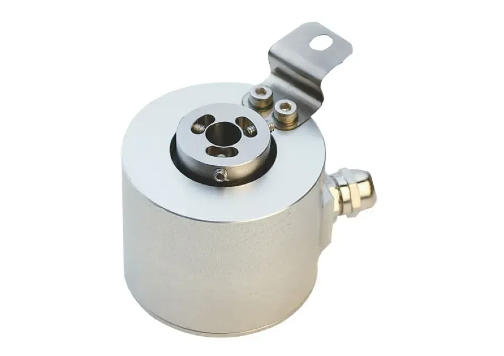
The modern industrial landscape is evolving rapidly, with robotics, automation, and smart manufacturing becoming central to production processes worldwide. At the core of these technological advances are precision motion control systems, which rely heavily on accurate feedback from sensors. Among the various types of sensors used today, brushless resolvers have emerged as indispensable components due to their reliability, durability, and versatility.
From robotic arms assembling electronics to conveyor systems in factories, brushless resolvers play a critical role in ensuring precise positioning, smooth motion, and efficient operation. This article explores the expanding uses of brushless resolvers, their working principles, advantages, and applications across industries.
A brushless resolver is an electromechanical sensor that measures the angular position and rotational speed of a shaft. It operates based on electromagnetic induction, producing sine and cosine signals that correspond to the rotor’s position. Unlike traditional resolvers, brushless resolvers eliminate mechanical brushes, which are prone to wear and tear. This design enhances durability and reduces maintenance requirements.
Key features of brushless resolvers include:
Absolute position feedback without the need for a reference reset.
High tolerance to vibration, temperature extremes, dust, and oil.
Long operational life due to the lack of mechanical contacts.
Smooth, continuous analog signals for precise motion control.
The combination of these features makes brushless resolvers suitable for demanding industrial environments where reliability and accuracy are paramount.
The operation of a brushless resolver involves a rotor and stator configuration similar to a transformer. The stator contains an excitation winding and two secondary windings positioned at 90 degrees to each other. When an alternating current passes through the excitation winding, a magnetic field is created. This field induces voltages in the secondary windings of the stator, which vary according to the rotor’s angular position.
The resulting sine and cosine signals are processed by a resolver-to-digital converter (RDC), which translates the analog signals into digital data that can be used by controllers. This allows machines to know the exact position and speed of the rotor at all times.
Because brushless resolvers provide absolute feedback, they maintain positional information even after power loss, making them highly reliable for critical applications.
Brushless resolvers offer several advantages that make them ideal for modern robotics and industrial automation:
Reliability and Longevity
Without brushes or other mechanical components that wear out, brushless resolvers can operate for years with minimal maintenance. This is essential for industries where downtime can be costly.
Environmental Robustness
Industrial environments often involve dust, oil, vibration, and high temperatures. Brushless resolvers are designed to withstand these conditions, unlike some optical or magnetic sensors that can be compromised in harsh conditions.
Smooth and Continuous Feedback
The analog sine and cosine signals from a resolver allow for smooth motion control. This reduces torque ripple and vibration in motors, which is critical in precision robotics and automated machinery.
Absolute Position Detection
Absolute feedback ensures that the system knows the rotor’s exact position even after a power outage. This prevents errors during startup and avoids the need for homing routines.
High Accuracy in Motion Control
While not as high-resolution as some optical encoders, brushless resolvers provide sufficient accuracy for most industrial automation tasks, including robotic arm articulation, conveyor control, and motor synchronization.
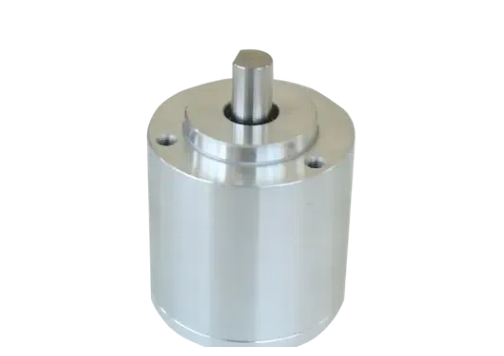
Robotics has become one of the most visible areas of brushless resolver use. Robots require precise position and motion control to perform tasks efficiently, safely, and accurately.
In factories, robotic arms are used for assembly, welding, painting, and packaging. Brushless resolvers provide the absolute position feedback required for accurate arm movement and orientation. By integrating resolvers with servo motors, robotic arms can execute complex movements with smooth acceleration and precise positioning.
Cobots work alongside humans in shared workspaces. Safety and accuracy are critical in these applications. Brushless resolvers enable precise torque control, allowing cobots to adjust motion in real-time and avoid collisions while performing tasks efficiently.
Automated guided vehicles (AGVs) and mobile robots rely on reliable motor feedback for navigation and stability. Brushless resolvers ensure smooth and accurate motion even on uneven surfaces or in environments with electromagnetic interference.
Beyond robotics, brushless resolvers have widespread applications across automated manufacturing processes.
Computer numerical control (CNC) machines require precise control of spindle rotation and axis positioning. Brushless resolvers provide the necessary feedback to achieve high machining accuracy and consistent product quality.
Conveyor belts in factories, warehouses, and logistics centers rely on precise motor control to ensure smooth movement and synchronization. Resolvers offer continuous feedback to motor drives, maintaining consistent speed and alignment across complex material handling systems.
Automated packaging lines benefit from brushless resolvers for precise positioning of packaging heads, filling machines, and labeling systems. Accurate feedback ensures products are processed correctly, reducing errors and waste.
Brushless resolvers are used extensively in servo motors and variable frequency drives (VFDs). They provide absolute rotor position feedback for field-oriented control (FOC), which optimizes torque and efficiency in motor operation. This is critical in reducing energy consumption and enhancing overall system performance.
In modern smart factories, automation demands more than just motion control—it requires integration, precision, and real-time monitoring. Brushless resolvers contribute in several ways:
Energy Efficiency: By enabling precise motor control, resolvers reduce energy waste, which is crucial in large-scale manufacturing.
Process Reliability: Machines can maintain consistent output and product quality, even under continuous operation.
Predictive Maintenance: Resolver feedback can be monitored to detect irregularities in motor behavior, allowing for predictive maintenance and minimizing unplanned downtime.
Scalability: Resolver-equipped systems can be scaled easily, whether for a single robotic arm or an entire automated production line.
As industrial automation evolves, brushless resolvers continue to adapt and expand their roles:
Miniaturization
Smaller and lighter brushless resolvers are being developed to fit compact motors and robotic components, enabling high-precision control without increasing system size.
Integration with Digital Systems
Advanced resolver-to-digital converters (RDCs) allow seamless integration with modern PLCs and motor controllers, making it easier to implement smart automation solutions.
Hybrid Sensing Systems
Some systems now combine brushless resolvers with optical or magnetic sensors to achieve both ruggedness and ultra-high precision. This hybrid approach is particularly useful in high-performance robotics.
Enhanced Durability
Ongoing improvements in materials and design increase resistance to vibration, heat, and environmental contamination, ensuring that resolvers can meet the demands of even the harshest industrial settings.
Support for IoT and Industry 4.0
Resolver feedback can be incorporated into factory-wide monitoring systems, providing real-time data for predictive maintenance, process optimization, and energy management in smart factories.
Automotive Assembly Lines: Robotic arms equipped with brushless resolvers assemble vehicle components with high precision, reducing defects and increasing production speed.
Electronics Manufacturing: Surface-mount technology (SMT) machines rely on resolvers to position circuit boards and components accurately.
Logistics and Warehousing: Conveyor motors with resolver feedback ensure smooth handling of parcels, reducing jams and increasing throughput.
Renewable Energy: Brushless resolvers are used in motorized systems for solar trackers and wind turbines, providing precise positioning for maximum energy capture.
While brushless resolvers are highly versatile, there are considerations to keep in mind:
Cost: Resolvers tend to have higher upfront costs compared to simple magnetic or incremental optical sensors.
Signal Conversion: Analog signals require resolver-to-digital conversion for modern digital controllers, adding complexity.
Size: Some resolver designs are larger than other sensors, which may require careful integration into compact systems.
Despite these challenges, the long-term benefits of durability, reliability, and precise motion control often outweigh the initial costs, especially in mission-critical applications.
Brushless resolvers are essential in modern robotics and industrial automation, providing reliable absolute position feedback even in harsh environments. This ensures smooth motion, precise control, and consistent performance in applications ranging from robotic arms and collaborative robots to CNC machines, conveyors, and industrial motors, meeting the increasing demand for precision and efficiency in manufacturing.
As technology advances, brushless resolvers are becoming smaller, more integrated, and better suited for smart factories and Industry 4.0. Companies like Shanghai Yingshuang (Windouble) Electric Machinery Technology Co., Ltd. lead in developing high-quality resolvers, helping industries enhance machine performance, improve energy efficiency, support predictive maintenance, and maintain overall system reliability.