
T: +86-15800900153
E: songwenyan@windouble.com.cn
E: songwenyan@windouble.com.cn
No.1230, Beiwu Road, Minhang District,Shanghai,China
Views: 0 Author: Site Editor Publish Time: 2025-06-26 Origin: Site


Reliable position feedback is the cornerstone of any high-performance automation system. Among the many types of feedback devices, housed resolvers stand out for their robustness, resistance to harsh environments, and long service life. However, even the most rugged resolver can suffer from performance degradation or premature failure if not properly maintained.
Every electromechanical device is subject to wear, contamination, and environmental stress. For housed resolvers—which rely on precise electromagnetic coupling and tight mechanical tolerances—even minor deviations in condition can translate into signal drift, increased noise, or outright failure. Proper maintenance:
Prevents Contamination: Dust, oil, and moisture can infiltrate seals over time, compromising insulation and creating signal leakage paths.
Mitigates Mechanical Loosening: Vibration and thermal cycling may loosen mounting hardware or cable connections, causing intermittent feedback or mechanical misalignment.
Extends Service Life: Catching early signs of wear allows for timely intervention—replacing seals, tightening fasteners, or realigning shafts—before more costly damage occurs.
Maximizes Uptime: Regular upkeep prevents unplanned downtime due to unexpected resolver faults, ensuring continuous production.
In short, a resolver that receives periodic care keeps its accuracy, repeatability, and reliability at peak levels throughout its lifetime.
A disciplined inspection regimen is the foundation of effective resolver maintenance. Below is a suggested checklist, which can be performed monthly for moderate-duty applications (e.g., standard factory automation) or quarterly for high-duty, mission-critical systems (e.g., aerospace ground equipment, heavy machinery).
Inspection Item | What to Look For | Action If Defect Found |
Cable Connections | Secure mating, no signs of frayed wires or loose pins | Reseat connectors; replace damaged cables |
Sealing Integrity | No cracks, gaps, or hardened/crumbled sealant around housing flanges | Replace O-rings or reapply silicone sealant |
Mounting Fasteners | Proper torque; no loose or missing bolts on flange or shaft coupling | Tighten to manufacturer’s torque specification |
Housing Surface | No dents, corrosion spots, or paint flaking that could hide seal defects | Clean gently; inspect for deeper damage; repair paint or housing as needed |
Cable Strain Relief / Glands | Glands tight; cable sheath not slipping or pinching at entry point | Adjust gland torque; fit proper strain relief clamps |
Electrical Grounding / Shielding | Continuity between housing and ground; shielding braid intact | Reattach grounding strap; repair shield braid |
**Visual Signal-Indicator (If Equipped) | LED or built-in diagnostics indicating healthy operation | Note error codes; refer to RDC manual |
Tip: Use a calibrated torque wrench when tightening resolver flanges and gland fittings. Over-torquing can deform seals, while under-torquing invites leaks.
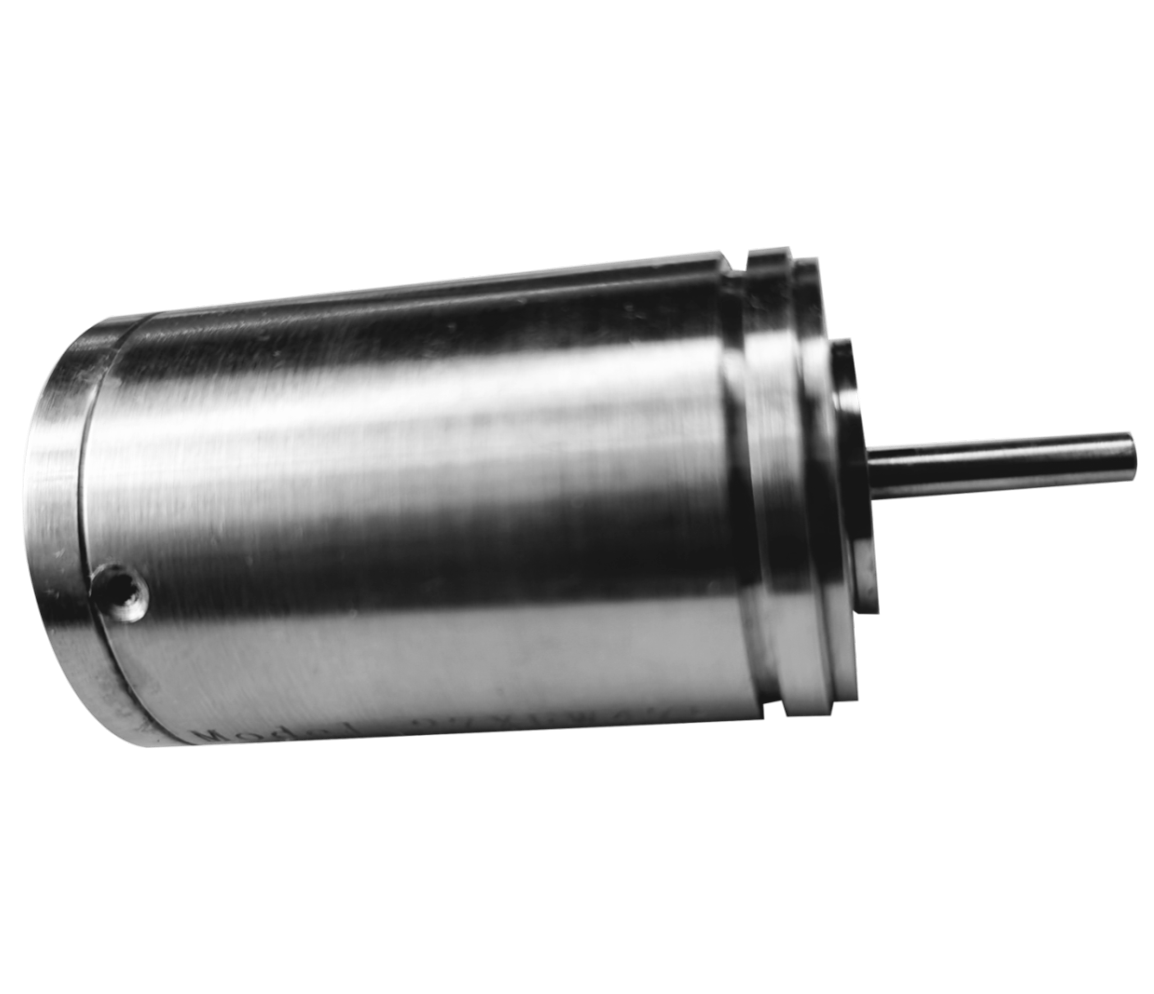
A clean resolver housing and connector interface not only look professional—they help prevent contamination that can compromise electrical performance. Follow these best practices:
Select Appropriate Cleaning Agents
Use non-corrosive, residue-free solvents such as isopropyl alcohol or manufacturer-approved electronics cleaners.
Avoid petroleum-based solvents (e.g., acetone, mineral spirits) that can degrade sealants or plastics.
Use Anti-Static, Lint-Free Cloths
Wipe the resolver housing gently with anti-static microfiber or low-lint wipes to remove dust, grease, and moisture.
Do not use paper towels or abrasive materials that can scratch the housing surface.
Clean Connector Receptacles
Inspect pin sockets for oxidation or debris.
Use a contact cleaner spray designed for electronics, then allow connectors to air-dry before mating.
Apply a tiny film of electrical contact grease if recommended by the resolver manufacturer—this aids in corrosion protection without impeding conductivity.
Dry Thoroughly Before Power-Up
Ensure all cleaned surfaces and connectors are fully dry to prevent short circuits or leakage currents.
By maintaining a dust- and residue-free exterior, you minimize our risk of seal failure and preserve the resolver's IP65/IP67 rating over time.
Visual and quantitative analysis of the resolver's sine and cosine outputs provides early warning of winding degradation, connector issues, or mechanical misalignment. Incorporate the following practices into your maintenance routine:
Probe the Resolver Outputs: Attach high-impedance oscilloscope probes to the sine and cosine leads (consult the resolver's datasheet for correct pin assignments).
Check Signal Amplitude: At rest (0° position) and at key angular positions (e.g., 90°, 180°), sine and cosine amplitudes should match the resolver’s rated excitation × coupling factor. Deviations beyond ±5% may indicate winding insulation breakdown or air-gap irregularities.
Inspect Waveform Purity: Look for distortion, noise spikes, or asymmetry. A clean, low-noise sine wave is the hallmark of a healthy resolver.
Connect to the RDC Module: Many RDC evaluation kits include software displays of real-time angle, velocity, and error codes.
Monitor Diagnostic Flags: Modern RDCs can flag:
Phase-loss conditions
Over- or under-voltage events
Excessive jitter or signal imbalance
Log Data Over Time: Continuous or periodic logging helps you spot gradual trends—such as creeping offset or rising noise floor—before they lead to failure.
Note: Always reference your resolver and RDC datasheets for proper excitation voltage, frequency range, and pinouts. Incorrect settings can damage the resolver windings.
Shanghai Yingshuang (Windouble) designs their housed resolvers with maintenance-friendly features and publishes clear guidance to ensure users can maximize sensor lifespan without extensive downtime:
Modular Seals and Glands
Windouble housings use standard O-rings and metric cable glands, making replacement parts readily available. No custom tooling is required for seal swaps.
Accessible Diagnostic Ports
Certain Windouble models include a small removable port plug that allows direct access to resolver leads without full cable removal—ideal for quick waveform inspections.
Color-Coded Wiring and Detailed Diagrams
Every resolver ships with a laminated wiring diagram and color-coded leads, reducing the risk of misconnection during maintenance.
Maintenance Task | Moderate-Duty Systems | High-Duty / Harsh Environments |
Visual Inspection & Cleaning | Every 3–6 months | Monthly |
Cable & Connector Check | Every 6 months | Quarterly |
Seal & Gland Replacement | Annually | Every 6 months |
Signal Waveform & RDC Diagnostic | Annually | Every 6 months |
Full Mechanical Re-torque of Flange Fasteners | Annually | Annually |
Pro Tip: Align maintenance windows with planned production downtimes (e.g., shift changes, scheduled line stops) to minimize impact on operations.
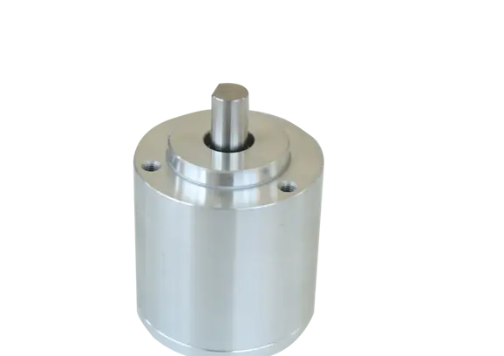
Beyond the core checklist, consider these supplementary strategies:
Environmental Monitoring
Install temperature and humidity sensors near resolver installations. Sudden excursions outside rated limits (e.g., over +100 °C or above 95% RH) should trigger alarms and proactive maintenance.
Vibration Isolation
If resolvers are mounted on high-vibration equipment, use isolation mounts or silicone damping pads to reduce transmitted shock. This helps preserve bearing life and housing integrity.
Proper Cable Management
Route resolver cables away from high-power motor leads and sharp edges. Use cable trays or protective conduits to prevent abrasion and EMI coupling.
Spare-Parts Inventory
Keep spare O-rings, cable glands, and a “hot-swappable” resolver unit on hand. Rapid replacement minimizes downtime if unexpected failures occur.
Housed resolvers are engineered for durability, but no sensor is truly maintenance-free—especially in demanding industrial settings. Adhering to a structured regimen of visual inspections, cleaning, seal replacement, and signal diagnostics ensures your Shanghai Yingshuang (Windouble) resolver continues to deliver precise, stable, and reliable position feedback for years. By integrating these tips into your maintenance program, you can:
Prevent Costly Failures: Early detection of wear or contamination avoids shutdowns and repairs.
Extend Service Life: Simple seal swaps and connector checks can add significant years of operation.
Maintain Peak Accuracy: Regular waveform analysis keeps your motion control systems finely tuned.
For detailed maintenance manuals, replacement parts, or technical support, visit www.windoublesensor.com or contact Windouble's service team. With the right care, your housed resolvers will continue powering your automation with unwavering precision.