
T: +86-15800900153
E: songwenyan@windouble.com.cn
E: songwenyan@windouble.com.cn
No.1230, Beiwu Road, Minhang District,Shanghai,China
Views: 0 Author: Site Editor Publish Time: 2025-06-26 Origin: Site


In the rapid transition toward clean power, renewable energy systems—particularly solar installations—are relying more than ever on advanced sensor technologies to maximize efficiency and uptime. Among these, housed resolvers have emerged as a key enabler for precision solar tracking, delivering robust, absolute position feedback in the harshest outdoor environments.
Solar photovoltaic panels capture the most energy when their surface is directly perpendicular to the sun's rays. Even small angular deviations can translate into significant power losses over the course of a day:
Energy Yield Sensitivity: Studies show that each degree of misalignment can reduce energy capture by 0.5–1.0%. Over a year, this loss compounds substantially across large utility-scale arrays.
Dynamic Sun Path: The sun’s elevation and azimuth shift continuously throughout the day and seasons. Trackers must adjust their angle smoothly and accurately to follow this path.
Mechanical Backlash and Wind Loads: Gear trains and linkages suffer from backlash, friction, and payload disturbances under wind gusts. Without precise feedback, these effects accumulate, leading to tracking errors.
High-precision position sensors—capable of resolving angular changes down to a few arcminutes—ensure that solar arrays maintain optimal orientation. Reliable feedback keeps the tracker control loop tight, correcting for mechanical slop, thermal expansion, and environmental disturbances in real time.
Solar trackers typically fall into two categories:
Single-Axis Trackers rotate panels along one horizontal or vertical axis.
Dual-Axis Trackers add a second rotation axis, enabling tilt in both elevation and azimuth.
Single-Axis Trackers
Simpler Mechanics, Moderate Gains: Rotating east to west over 180° daily, single-axis systems boost annual energy yield by 15–25% compared to fixed mounts.
Position Range: Typically ±45° to ±60° from horizontal, requiring precise but limited-angle feedback.
Dual-Axis Trackers
Maximum Energy Capture: By following both the sun's east-west and elevation changes, dual-axis trackers can increase yield by up to 35% over fixed systems.
Complex Motion Profiles: They require two independent resolvers—one for each axis—capable of 360° continuous rotation on the azimuth axis and ±60° on the elevation axis.
Both architectures place unique demands on resolver specifications:
Resolution & Repeatability: Dual-axis systems need higher resolution (often < 5 arcminutes) to justify the added mechanical complexity.
Robustness Across Full Ranges: Azimuth trackers must handle full 360° rotations without loss of absolute position on power-up—a strength of absolute housed resolvers.
Whether single or dual, the choice of feedback device directly impacts system accuracy, uptime, and return on investment.
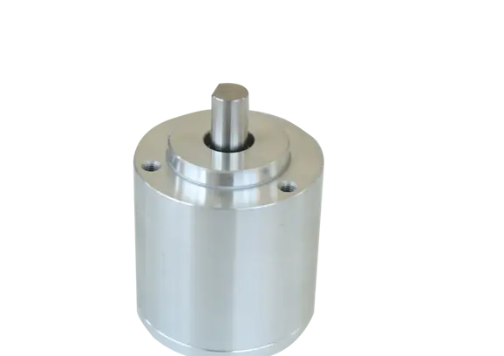
While optical encoders have long been used for precise angle measurement, housed resolvers offer distinct benefits in outdoor renewable-energy settings:
Feature | Housed Resolver | Optical Encoder |
Contaminant Resistance | Sealed housing (IP65–IP67) blocks dust, water | Open “optical window” vulnerable to dirt |
Temperature Range | –40 °C to +100 °C (up to +150 °C optional) | Typically –20 °C to +70 °C |
Absolute Position on Startup | Always knows exact angle without homing | Often requires index pulse/homing move |
EMI Immunity | Transformer-based signals reject electrical noise | Sensitive to stray light and EMI |
Maintenance Requirements | Virtually maintenance-free over millions of cycles | Periodic cleaning/calibration needed |
Sealed Robustness: Housed resolvers are enclosed in corrosion-resistant metal bodies with precision seals, preventing ingress of dust, sand, or moisture common in desert and coastal solar farms.
Absolute Feedback: Upon power-up, resolvers immediately output the exact shaft angle—no additional motion or homing cycle is needed, minimizing downtime and simplifying control logic.
EMI and Vibration Tolerance: Outdoor inverters, power cables, and wind gusts generate electrical and mechanical noise; resolver signals remain stable where optical encoders might drop counts or lose tracking.
These advantages translate into higher availability, reduced maintenance, and lower total cost of ownership—critical factors for large-scale PV deployments.
Solar farms are subjected to extreme and rapidly changing climates:
Desert Sites: Daytime temperatures above 60 °C, blowing sandstorms, intense UV exposure.
Coastal Arrays: Salt spray corrosion, high humidity, and potential for marine fouling.
Arctic and Alpine Installations: Freezing temperatures, snow, and ice accumulation.
Windouble's housed resolvers address these conditions through:
High-Temperature Materials:
Specialized insulation on windings and high-temperature epoxy potting sustain stable performance up to +150 °C.
IP-Certified Seals:
Standard models achieve IP65 (dust-tight and water-jet resistant), with optional IP67/IP68 variants for temporary submersion scenarios.
Corrosion-Resistant Alloys:
Marine-grade aluminum or stainless steel housings prevent degradation in salt-air environments.
Vibration-Hardened Construction:
Internal components are epoxy-bonded and supported by micro-bearings tested to withstand up to 20 g RMS vibration, ensuring long-term mechanical integrity.
Through these measures, housed resolvers maintain accuracy and reliability across the world's most challenging renewable-energy sites.
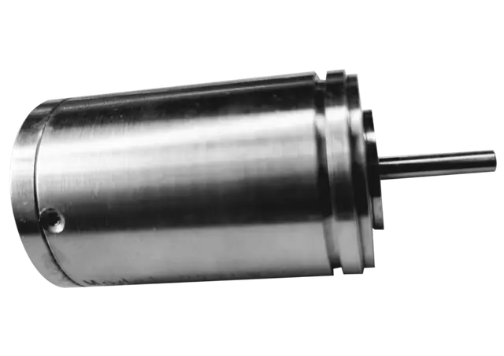
Shanghai Yingshuang (Windouble) Electric Machinery Technology Co., Ltd. offers a complete line of housed resolvers optimized for solar tracking applications. Key aspects of their integration approach include:
Custom Shaft and Flange Options:
Windouble provides a range of mounting flanges and shaft diameters to fit popular tracker drive units from OEMs like Nextracker, Array Technologies, and Soltec.
Standardized Electrical Interfaces:
Resolvers are pre-wired with robust IP-rated connectors or cable-gland assemblies, simplifying field replacement and reducing wiring errors.
Resolver-to-Digital Converter (RDC) Compatibility:
Windouble collaborates with leading RDC manufacturers to ensure plug-and-play operation with common PV tracker controllers, supporting interface protocols such as Modbus RTU and CANopen.
Embedded Diagnostics Option:
Select models incorporate a built-in temperature sensor and signal-health monitor, enabling predictive maintenance via remote telemetry.
Case Study: A 50 MW desert solar farm in Northern China replaced optical encoders on 1,200 single-axis trackers with Windouble housed resolvers. Over two years, the site reported:
Zero encoder-related outages (compared to 8 hours of downtime in the previous year).
15% reduction in maintenance labor (no more cleaning or recalibration).
Improved annual energy yield by 1.2% due to tighter tracking accuracy.
This real-world success underscores the value of properly integrated housed resolvers in large-scale renewable projects.
The next frontier in PV tracking and renewable-energy systems lies in deeper integration between feedback sensors and control electronics:
Edge-Embedded Intelligence:
Future housed resolvers will include microcontrollers or digital signal processors (DSPs) built into the housing. This on-board intelligence can preprocess signals, compensate for thermal drift, and communicate diagnostic data over fieldbus protocols without external modules.
Predictive Maintenance and IoT Connectivity:
By streaming real-time resolver health metrics (e.g., excitation current, signal amplitude, temperature), operators can predict seal degradation or bearing wear before failures occur. Cloud-based analytics will optimize maintenance schedules and reduce lifecycle costs.
Adaptive Control Algorithms:
Resolver feedback can feed into advanced machine-learning algorithms within the tracker controller, allowing dynamic tuning of PID parameters based on wind conditions, temperature drift, and mechanical wear.
Standardized Digital Interfaces:
Adoption of EtherCAT, Profinet, and TSN (Time-Sensitive Networking) in renewable-energy controllers will enable high-speed, deterministic resolver data exchange, paving the way for synchronized multi-tracker fields that reduce power electronics stress and grid harmonics.
Windouble is actively investing in co-development projects with control-system vendors to deliver resolver modules that speak directly to IoT gateways, eliminating the need for bulky intermediate RDC boxes and streamlining system architecture.
Housed resolvers play a pivotal role in the efficiency, reliability, and longevity of modern renewable-energy systems—especially solar trackers. By providing absolute, high-resolution feedback in a fully sealed, rugged package, they outmatch optical encoders in contaminated, high-temperature, and high-vibration environments. Windouble's expertise in customizing shaft interfaces, optimizing housing materials, and collaborating on smart-controller integration makes their resolvers ideal for both single- and dual-axis PV arrays worldwide.
As the renewable-energy sector marches toward greater automation, predictive maintenance, and edge intelligence, the synergy between housed resolver hardware and advanced control algorithms will only deepen. Engineers and project owners who adopt these emerging resolver solutions can expect:
Higher energy yields through precise, loss-minimized tracking
Lower maintenance costs via sealed, low-wear designs
Enhanced uptime backed by built-in diagnostics and condition monitoring
Simplified system architecture with smart resolver interfaces
For more information on Windouble's housed resolver portfolio, application engineering support, or to request samples for your next PV tracking project, visit www.windoublesensor.com or contact our technical sales team today. Empower your renewable-energy installation with the precision and resilience that only modern housed resolver technology can deliver.