
T: +86-15800900153
E: songwenyan@windouble.com.cn
E: songwenyan@windouble.com.cn
No.1230, Beiwu Road, Minhang District,Shanghai,China
Views: 0 Author: Site Editor Publish Time: 2025-09-15 Origin: Site


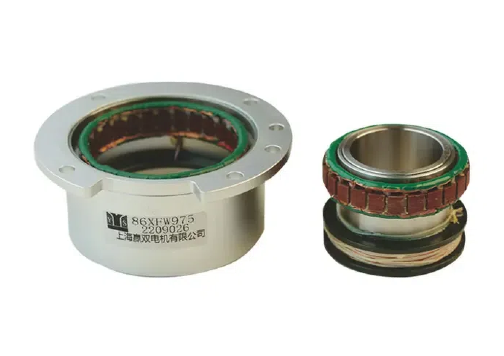
Modern industry relies on precise control of machines, motors, and automated systems. Whether it is a robot arm assembling electronics, an electric vehicle accelerating smoothly, or an aircraft navigation system operating in extreme conditions, accuracy and reliability are critical. At the heart of these systems are devices that provide information about position, speed, and rotation. One of the most dependable devices for this task is the brushless resolver.
Although less well-known than digital encoders, brushless resolvers have been around for decades and continue to play a vital role in advanced industries. Their ability to function reliably in harsh environments, combined with their mechanical robustness, makes them indispensable in applications where failure is not an option.
This article provides a comprehensive overview of brushless resolver technology, covering its basic principles, how it works, its advantages, and the many applications where it is used today.
A resolver is an electromechanical device that measures the angular position and speed of a rotating shaft. It is similar in purpose to a rotary encoder but uses electromagnetic signals instead of digital pulses to provide feedback. The word “resolver” comes from its original use in resolving the angle of rotation into sine and cosine signals.
A brushless resolver is a type of resolver that eliminates the use of brushes, which are mechanical components that make electrical contact with rotating parts. In traditional resolvers, brushes were needed to transfer current into the rotor. Over time, brushes wear out, require maintenance, and limit durability. Brushless resolvers avoid this problem by using electromagnetic coupling, meaning there are no physical contacts inside. This design makes them more robust, longer-lasting, and capable of operating in extreme environments.
The operation of a brushless resolver is based on electromagnetic induction. Its structure resembles that of a transformer, consisting of a stator (stationary part) and a rotor (rotating part).
Stator Coils: The stator typically contains three sets of windings: an excitation winding and two secondary windings arranged 90 degrees apart. The excitation winding generates a reference signal.
Rotor Coil: The rotor, which is attached to the rotating shaft, couples the excitation signal to the stator windings through electromagnetic induction. Importantly, in a brushless resolver, this is done without brushes.
Sine and Cosine Outputs: As the rotor turns, the induced voltages in the stator windings vary in proportion to the sine and cosine of the rotor’s angle. These two signals can then be processed by control electronics to calculate the exact position of the shaft.
Speed Measurement: By differentiating position over time, the system can also measure rotational speed.
This continuous, analog method of position sensing makes resolvers inherently smooth and highly reliable, especially compared to digital encoders that rely on discrete steps.
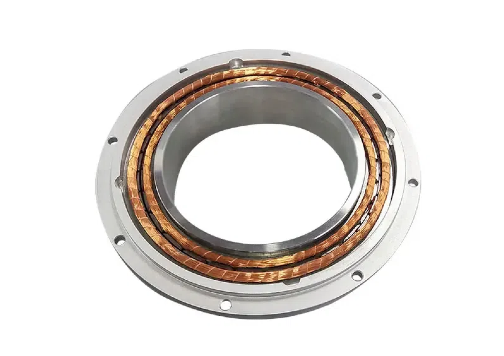
Brushless resolvers are known for several features that set them apart from other position-sensing devices:
No Brushes or Contacts: Eliminates wear and maintenance issues, ensuring long operational life.
Robust Construction: Withstands vibration, shock, dust, moisture, and temperature extremes.
Absolute Position Feedback: Provides continuous, absolute angle measurement without requiring a reference reset.
High Reliability: Suitable for mission-critical applications like aerospace and defense.
Wide Temperature Range: Operates reliably in environments from deep cold to extreme heat.
Electromagnetic Immunity: Less affected by electrical noise compared to some digital encoders.
These characteristics explain why brushless resolvers remain in demand even as digital sensors become more widespread.
Both brushless resolvers and rotary encoders serve the same purpose—detecting shaft position and speed—but they differ in design and performance characteristics.
Accuracy: Encoders can achieve very high precision, especially optical encoders. However, brushless resolvers provide continuous analog accuracy without the possibility of missing pulses.
Durability: Brushless resolvers perform better in harsh environments with dust, oil, vibration, or temperature extremes. Encoders may fail in such conditions.
Maintenance: Resolvers are virtually maintenance-free, whereas encoders may require cleaning or recalibration.
Cost: Encoders are often cheaper and easier to integrate with digital systems. Brushless resolvers tend to be more expensive but are chosen for reliability.
In short, encoders dominate in clean, controlled environments where precision and cost are priorities, while brushless resolvers excel in rugged conditions where reliability matters most.
Brushless resolvers are widely used across industries that demand robust and reliable position feedback. Some of the most important applications include:
Aircraft systems, from jet engines to flight control mechanisms, require absolute reliability. Brushless resolvers are used in engine control systems, radar positioning, missile guidance, and avionics. Their ability to withstand high temperatures, vibrations, and extreme altitudes makes them ideal for aerospace.
In electric and hybrid vehicles, brushless resolvers are used for motor control, transmission systems, and steering mechanisms. They ensure smooth operation of electric motors, providing precise rotor position data necessary for efficient torque control. Unlike encoders, they are unaffected by oil, dust, or high under-hood temperatures.
In manufacturing plants, brushless resolvers provide feedback for robotics, CNC machines, and servo motors. Their ruggedness allows them to function reliably in environments with heavy dust, oil, or constant vibration—conditions that can damage more delicate sensors.
Wind turbines rely on resolvers to monitor blade pitch and yaw systems, which adjust turbine blades for maximum energy efficiency. Because turbines are exposed to harsh weather conditions, brushless resolvers are the preferred choice for long-term durability.
Resolvers are also employed in locomotives, marine propulsion systems, and other heavy-duty transport applications. These environments involve constant vibration, wide temperature swings, and high reliability requirements, all of which favor brushless resolver technology.
Even though digital sensors have become more advanced and affordable, brushless resolvers continue to hold a strong position in industry. Their continued use is driven by several advantages:
Longevity: With no brushes or fragile components, they can last for decades.
Resilience: Capable of functioning in extreme conditions where other sensors fail.
Simplicity: Analog signal output can be processed with relatively simple electronics.
Absolute Position: They always provide the exact angle, even after a power loss.
Smooth Output: Unlike step-based encoders, resolvers provide a continuous output signal.
These benefits are especially important in critical systems where downtime or failure is unacceptable.
While highly reliable, brushless resolvers are not perfect. Some limitations include:
Lower Resolution Compared to Encoders: For ultra-high-precision tasks, encoders may be superior.
Analog Signal Processing Required: They require additional electronics (resolver-to-digital converters) to interface with digital control systems.
Higher Cost: Initial costs are generally higher compared to basic encoders.
Bulkier Design: Resolvers can be larger and heavier than compact digital sensors.
Nevertheless, in applications where reliability outweighs these drawbacks, brushless resolvers remain the preferred choice.
A major use of brushless resolvers is in motor control systems, especially for brushless AC motors and synchronous motors. In these systems, accurate rotor position is crucial for efficient operation.
The resolver provides the necessary position feedback, enabling the control electronics to adjust current and voltage in real time. This ensures smooth torque production, efficient energy use, and precise speed control. Without accurate feedback, motors could lose synchronization, leading to inefficiency, overheating, or even damage.
This explains why brushless resolvers are often paired with high-performance motors in electric vehicles, industrial robots, and aerospace actuators.
The future of brushless resolvers remains strong, even as new technologies emerge. Several trends are worth noting:
Integration with Digital Systems: Advances in resolver-to-digital converter (RDC) technology make it easier to integrate resolvers with modern digital controllers.
Miniaturization: Research is leading to smaller, lighter brushless resolvers for compact applications like drones and medical equipment.
Hybrid Solutions: Some manufacturers are combining the robustness of resolvers with digital communication features, offering the best of both worlds.
Growing Electric Vehicle Market: The global push for electric vehicles ensures continued demand for robust position sensors like resolvers.
Automation Expansion: As industries adopt more robotics and automated machinery, reliable feedback devices will remain critical.
Far from being outdated, brushless resolver technology is adapting and evolving to remain relevant in the 21st century.
Brushless resolvers may not be as widely discussed as encoders or other digital sensors, but their role in modern industry is profound. By providing absolute, continuous, and highly reliable position feedback, they enable critical systems to function smoothly under extreme conditions.
From aerospace and defense to electric vehicles, renewable energy, and industrial automation, brushless resolvers prove their worth by combining durability with performance. While they have some limitations in resolution and cost, their unmatched reliability ensures that they remain a cornerstone of advanced motor control and position-sensing applications.
As industries continue their shift toward advanced manufacturing, automation, and electrification, the importance of brushless resolver technology is only expected to grow. They are a perfect example of how a proven, robust technology can continue to adapt and support the needs of tomorrow’s high-performance industries.