
T: +86-15800900153
E: songwenyan@windouble.com.cn
E: songwenyan@windouble.com.cn
No.1230, Beiwu Road, Minhang District,Shanghai,China
Views: 0 Author: Site Editor Publish Time: 2026-07-14 Origin: Site


If you’re currently using a standard encoder or a single-speed resolver in your system, have you evaluated whether your equipment truly meets the precision, stability, and reliability demands of your application? It’s crucial to understand the capabilities of your current system, especially if you are working with high-precision machinery that demands consistent, high-quality feedback for optimal performance. Upgrading to a Dual Speed Resolver could provide the enhanced accuracy and durability you need, but is it the right decision for your specific application? This article will help you assess whether a dual-speed resolver upgrade is the right choice by covering the key factors to consider, the advantages of this technology, and potential challenges that come with the integration process.
Before making the decision to upgrade, it's important to evaluate the critical aspects of your current motion feedback system. Understanding these factors will help you determine if a dual-speed resolver is the right choice for your needs.
The first factor to consider is the precision required by your system. Is your application demanding high-resolution angle feedback, such as arcminute or even arcsecond accuracy? If your machinery relies on accurate positioning for operations like CNC machining, robotics, or servo-controlled systems, precision becomes essential. A dual-speed resolver provides an outstanding advantage in these areas, as it integrates a coarse and fine resolver for tracking both large and small angle movements, offering precise 360° positioning with enhanced resolution.
Another crucial consideration is the environmental conditions in which your system operates. Does your system need to perform in extreme temperatures, high vibration, humidity, dust, or electromagnetic interference? If your system is exposed to such harsh environments, a dual-speed resolver would be a better option than a standard encoder. While encoders may struggle in these conditions due to their sensitivity to environmental factors, dual-speed resolvers excel in these tough environments. The robust design of a dual-speed resolver, with its analog signal output and lack of delicate optical or magnetic components, provides superior durability and accuracy.
When considering an upgrade, it’s important to assess whether your current system is compatible with the technology of a dual-speed resolver. Does your controller support analog sine/cosine outputs and resolver-to-digital converters (RDCs)? If not, you may need to invest in additional hardware or modifications to ensure seamless integration. While the dual-speed resolver offers improved performance, you need to ensure that your system can support these analog outputs and the associated conversion technology.
Finally, consider your system’s requirements for longevity and reliability. How often does your current setup require maintenance? If your current system frequently requires recalibration, repairs, or replacement of components, the dual-speed resolver could be an excellent solution. These resolvers are designed to be low-maintenance and highly durable, offering longer lifespans than encoders, especially in harsh industrial conditions. A dual-speed resolver will reduce the frequency of failures and decrease downtime, leading to greater operational efficiency and cost savings in the long run.
Now that we’ve established the factors to consider, let’s dive deeper into the specific advantages of upgrading to a dual-speed resolver.
One of the most compelling reasons to upgrade to a dual-speed resolver is the significant improvement in precision. The dual-speed resolver combines two distinct systems—coarse and fine resolvers—that work together to track both large and small angular changes. The coarse resolver tracks the number of revolutions, while the fine resolver ensures precise intra-revolution tracking. This dual setup provides absolute mechanical angle feedback with superior resolution, improving your system’s overall accuracy from arcminute to arcsecond precision.
Another key advantage is the dual-speed resolver’s exceptional environmental resilience. Unlike optical encoders, which are sensitive to dust, moisture, and temperature fluctuations, the dual-speed resolver operates using an analog transformer design that is inherently more resistant to these environmental factors. Whether your system operates in extreme temperatures, high-vibration environments, or conditions with a lot of dust and debris, a dual-speed resolver will maintain stable and reliable performance. This makes it an ideal choice for industries like manufacturing, robotics, aerospace, and defense.
The dual-speed resolver offers a robust solution that is less likely to fail under harsh conditions. In comparison, encoders often experience higher failure rates due to mechanical wear, optical interference, or exposure to contaminants. The dual-speed resolver’s simpler design—free from delicate optical components—ensures a lower risk of failure and less frequent maintenance. This means that systems using dual-speed resolvers tend to operate with fewer interruptions, resulting in higher productivity and reduced operational costs.
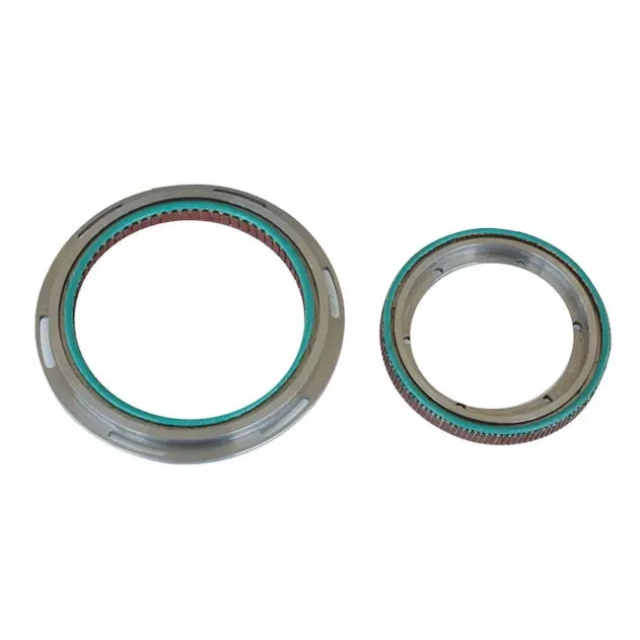
While the dual-speed resolver offers numerous advantages, there are a few challenges to consider before making the upgrade.
As mentioned earlier, the key consideration when upgrading to a dual-speed resolver is ensuring system compatibility. You need to determine whether your existing control system can support the analog outputs from the resolver and if it’s compatible with the necessary resolver-to-digital conversion technology (RDC). If not, you may need to invest in additional hardware, such as an RDC module, which could add to the overall cost of the upgrade.
Another factor to weigh is the cost and complexity of integrating a dual-speed resolver into your system. Compared to standard encoders, dual-speed resolvers require more complex integration, particularly when it comes to converting the analog sine/cosine signals into digital data. This may involve additional setup and calibration steps, which can increase both upfront costs and engineering efforts. However, the benefits of reduced failure rates and enhanced precision can outweigh these initial costs in the long term.
Consider whether your application environment justifies the upgrade. For applications that operate in relatively clean, controlled environments with minimal temperature or vibration fluctuations, a standard encoder may provide sufficient performance at a lower cost. However, for systems that require extreme precision or need to function in challenging conditions, the dual-speed resolver is the more suitable choice.
Once you've determined that upgrading to a dual-speed resolver is the right decision, the next step is to integrate it effectively into your system. Here’s how you can successfully make the transition.
The first step is ensuring compatibility with your existing controllers or drive systems. You may need to install an appropriate resolver-to-digital converter (RDC) or signal conditioning module to interface with the resolver’s analog outputs. Make sure your control system is capable of processing the signals from the resolver and converting them into usable data for your machinery.
Proper calibration and installation are crucial for achieving the best performance from your dual-speed resolver. Ensure that the stator and rotor are correctly aligned and that the system is properly shielded from environmental interference such as electromagnetic noise. Additionally, take measures to protect the system from dust, moisture, and extreme temperature fluctuations by using appropriate enclosures and sealing methods.
Before fully implementing the dual-speed resolver in your system, it’s essential to perform thorough testing. This includes both static and dynamic angle accuracy tests, temperature cycling, vibration testing, and lifecycle testing. These tests will help validate the performance and ensure that the dual-speed resolver meets the required precision standards for your application.
At Shanghai Yingshuang (Windouble) Electric Machinery Technology Co., Ltd., we specialize in the development and manufacturing of high-precision dual-speed resolvers. Our resolvers are designed with flexibility and performance in mind, making them an excellent choice for replacing traditional encoders or single-speed resolvers in a variety of applications. Our products are engineered for durability, high precision, and low maintenance, ensuring long-term reliability in the toughest conditions.
For more information on how our dual-speed resolvers can enhance the performance of your system, contact us today. We can help you evaluate your needs, provide detailed product specifications, and assist with integration.
Upgrading to a dual-speed resolver can significantly enhance the precision, reliability, and longevity of your motion control system. While it may require some investment in integration and system compatibility, the benefits of improved performance and reduced maintenance costs make it a smart upgrade for applications that demand high-precision feedback and operate in harsh environments. Consider evaluating your system's needs and consulting with a professional to ensure a smooth transition. For more information on how to upgrade to a dual-speed resolver, contact us today to discuss your specific requirements and explore how our solutions can benefit your operations.
Q1: What makes a dual-speed resolver better than an encoder for precision control?
A1: The dual-speed resolver offers both coarse and fine angle tracking, providing higher precision and reliability, especially in harsh environments where encoders may fail.
Q2: Can dual-speed resolvers handle extreme environmental conditions?
A2: Yes, dual-speed resolvers are designed to be durable and resistant to high temperatures, vibration, dust, and electromagnetic interference, making them ideal for industrial applications.
Q3: What challenges should I expect when upgrading to a dual-speed resolver?
A3: The main challenges include ensuring system compatibility with the analog outputs and potential additional costs related to the integration of resolver-to-digital converters (RDC).
Q4: How do I ensure proper installation and calibration of a dual-speed resolver?
A4: Proper installation involves ensuring correct alignment of the stator and rotor, protecting the system from environmental interference, and conducting thorough testing to validate performance.