
T: +86-15800900153
E: songwenyan@windouble.com.cn
E: songwenyan@windouble.com.cn
No.1230, Beiwu Road, Minhang District,Shanghai,China
Views: 0 Author: Site Editor Publish Time: 2025-09-15 Origin: Site


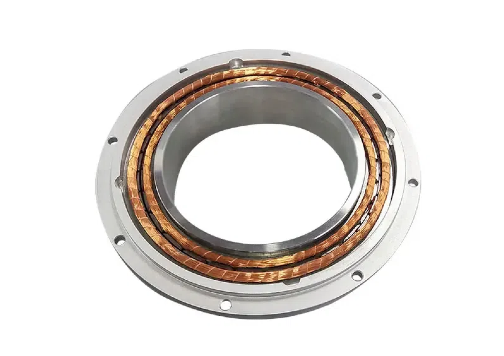
In modern industry, precision and reliability are essential. Whether it is the motion of a robotic arm, the rotation of a wind turbine, or the drive of an electric vehicle motor, machines depend on accurate position and speed feedback to operate correctly. This information is provided by position sensors, with two of the most common types being brushless resolvers and optical encoders.
At first glance, both devices appear to do the same thing—measure shaft position and provide feedback to control systems. However, their principles of operation, strengths, and limitations are very different. Choosing the right one depends on the specific requirements of the application.
This article offers a detailed exploration of brushless resolvers and optical encoders, highlighting how each works, where each excels, and the considerations that matter when deciding between them.
A resolver is an electromechanical device that works much like a transformer. It measures the angular position of a rotating shaft by generating analog signals based on electromagnetic induction. A brushless resolver eliminates the need for mechanical brushes, instead relying entirely on electromagnetic coupling between the rotor and stator.
The stator contains windings arranged at specific orientations. When the excitation winding is energized with an alternating current, voltages are induced in the secondary windings. As the rotor turns, the amplitudes of these voltages vary according to sine and cosine functions of the rotor’s angle. Electronics then process these signals to determine shaft position and speed.
Key qualities of brushless resolvers include:
Absolute position feedback without needing a reset.
High durability and reliability due to the absence of brushes.
Capability to withstand vibration, dust, oil, and wide temperature extremes.
Long operational life with minimal maintenance.
Because of these features, brushless resolvers are often described as rugged and dependable, even if they are not always the most precise solution available.
An optical encoder is a digital sensor that uses light to detect position. It typically consists of a light source, a photosensitive detector, and a rotating disk with transparent and opaque sections. As the disk rotates with the shaft, the light passing through is interrupted in a patterned way, creating electrical signals that represent the shaft’s position.
There are two main types of optical encoders:
Incremental encoders, which provide pulses corresponding to increments of movement. These are simple and cost-effective but only give relative position data, requiring a reference point when powered on.
Absolute encoders, which provide a unique digital code for each shaft position, ensuring precise absolute position feedback without needing a reset.
The main advantages of optical encoders include:
Very high resolution and accuracy.
Compact size suitable for integration in tight spaces.
Easy compatibility with digital control systems.
Wide variety of designs tailored for different levels of precision.
However, optical encoders are sensitive to dust, dirt, vibration, and temperature changes. They work best in clean, controlled environments.
Although both devices provide position feedback, their characteristics differ significantly. Understanding these differences is key to making the right choice.
Optical encoders are renowned for their high accuracy. They can measure position with extremely fine resolution, often reaching thousands of counts per revolution. This makes them suitable for applications like precision robotics, medical devices, and semiconductor manufacturing, where tiny errors can cause big problems.
Brushless resolvers, on the other hand, provide continuous analog signals that can be processed into accurate angle measurements, but their resolution is generally lower. For many industrial applications, this level of accuracy is sufficient, but in ultra-high-precision tasks, optical encoders have the advantage.
Resolvers are built to last in challenging conditions. Their electromagnetic design means they are unaffected by dust, oil, or dirt. They can also handle shock, vibration, and extreme temperatures. This makes them ideal for heavy-duty uses such as aerospace, defense, railway, and marine systems.
Optical encoders, however, are more delicate. Dust or oil on the encoder disk can interfere with light transmission, leading to errors. They are also more sensitive to vibration and temperature shifts. For this reason, they are better suited for clean, protected environments like laboratories or precision factories.
Brushless resolvers are virtually maintenance-free. Without brushes or fragile optical components, they can operate for decades with minimal servicing. Their design ensures long-term stability and reliability.
Optical encoders may require occasional maintenance, especially in environments where contamination is possible. Over time, the light source or detector may degrade, or the disk may become damaged, requiring replacement.
Brushless resolvers produce analog signals in the form of sine and cosine voltages. To interface with modern digital control systems, these signals must be converted using a resolver-to-digital converter (RDC). While this adds complexity, it also provides smooth, continuous feedback.
Optical encoders, in contrast, naturally produce digital signals, which makes them easier to integrate into digital control architectures without extra conversion hardware.
Optical encoders, especially incremental models, are generally less expensive than brushless resolvers. This makes them attractive for applications where high volume and cost efficiency are critical.
Brushless resolvers usually come at a higher price point due to their rugged design and long life. However, when reliability is more important than initial cost, resolvers often prove more economical in the long run because they reduce downtime and replacement needs.
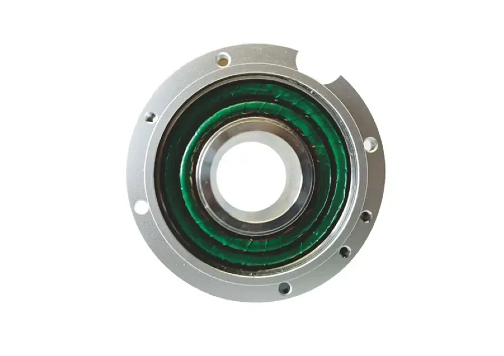
Brushless resolvers are used in industries where reliability and ruggedness are essential. Examples include:
Aerospace: Jet engines, flight control systems, radar antennas, and missile guidance all depend on resolvers for accurate position feedback under extreme conditions.
Electric Vehicles: Used for motor control and steering systems, providing robust feedback even in the presence of oil, dust, and heat.
Industrial Automation: Robotics, CNC machines, and heavy machinery benefit from resolvers’ durability in demanding factory environments.
Renewable Energy: Wind turbines use resolvers in blade pitch and yaw systems to optimize efficiency despite outdoor exposure.
Railway and Marine Systems: Locomotives and ships rely on resolvers for propulsion and navigation systems that must operate continuously without failure.
Optical encoders shine in applications where precision and compact design are more important than ruggedness. These include:
Precision Robotics: Industrial robots and robotic arms use encoders to achieve fine motion control and repeatability.
Medical Devices: Surgical robots, diagnostic imaging systems, and lab automation equipment require extremely precise positioning.
Semiconductor Manufacturing: Encoders provide the fine accuracy needed for wafer alignment and microchip production.
Office Equipment: Printers and scanners use incremental encoders for cost-effective position feedback.
Automated Inspection Systems: Encoders allow for high-resolution positioning of cameras and inspection tools.
The choice between a brushless resolver and an optical encoder depends on the specific demands of the application.
If absolute reliability in extreme environments is the priority, a brushless resolver is the better choice. Its ruggedness and long lifespan outweigh its higher cost and lower resolution.
If high precision in a clean and controlled environment is the priority, an optical encoder is the right solution. Its high resolution and easy integration with digital systems make it perfect for accuracy-driven applications.
If both precision and durability are needed, hybrid solutions or redundancy systems may be considered, combining resolvers for reliability and encoders for precision.
Ultimately, the decision should be guided by the conditions of use, the level of precision required, cost considerations, and the long-term reliability goals of the system.
Both brushless resolvers and optical encoders continue to evolve alongside advancements in automation, electrification, and robotics.
Resolvers are benefiting from smaller, lighter designs and better integration with digital electronics through advanced resolver-to-digital converters. Their role in electric vehicles, aerospace, and renewable energy is expected to grow as these industries expand.
Optical encoders are also advancing, with improvements in resolution, durability, and compactness. Absolute encoders in particular are becoming more affordable and widespread, opening up new opportunities in robotics and precision automation.
It is likely that both technologies will coexist for the foreseeable future, each serving applications that best match their strengths.
Brushless resolvers and optical encoders are both vital technologies in the world of position sensing. While they share the same purpose—providing feedback on shaft position and speed—their designs, strengths, and limitations make them suited to different environments.
Resolvers excel in harsh, demanding conditions where reliability and long life are critical. Optical encoders, meanwhile, dominate in precision applications where resolution and digital integration are more important than ruggedness.
The choice between them is not simply technical but strategic, depending on the balance of cost, accuracy, durability, and environmental challenges. As industries continue to advance, both brushless resolvers and optical encoders will remain central to the pursuit of efficiency, precision, and innovation in motion control systems.