
T: +86-15800900153
E: songwenyan@windouble.com.cn
E: songwenyan@windouble.com.cn
No.1230, Beiwu Road, Minhang District,Shanghai,China
Views: 0 Author: Site Editor Publish Time: 2025-09-15 Origin: Site


The electric vehicle (EV) market is rapidly transforming the automotive industry. From passenger cars to commercial vehicles, the shift toward electrification is driven by environmental concerns, energy efficiency, and technological innovation. At the heart of this transformation lies the electric motor, a critical component responsible for propulsion. However, the effectiveness of an electric motor depends heavily on precise control of its speed, torque, and position.
This is where brushless resolvers come into play. These devices provide accurate and reliable position feedback to motor controllers, enabling smooth operation, efficiency, and safety in EVs. While they may not be widely recognized by the general public, brushless resolvers are indispensable in electric vehicle technology. This article explores their role in EV motor control, explaining how they work, why they are essential, and how they compare to alternative position sensors.
Electric vehicles typically use brushless DC (BLDC) motors or permanent magnet synchronous motors (PMSMs). Unlike traditional internal combustion engines, these motors rely on precise electronic control to regulate torque and speed. The motor controller constantly adjusts voltage and current to the motor based on input from sensors that detect rotor position and speed.
Without accurate feedback, motor control becomes inefficient, leading to power loss, vibration, overheating, or even motor damage. Therefore, high-performance position sensors are crucial for achieving optimal efficiency and reliability in EV motors.
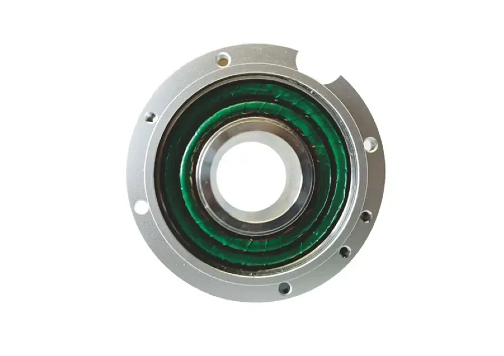
A brushless resolver is an electromechanical sensor that measures the angular position and speed of a rotating shaft. Unlike traditional resolvers, brushless versions do not have brushes, which are mechanical contacts that can wear out over time. Instead, they rely on electromagnetic induction between the rotor and stator, eliminating friction and extending operational life.
The resolver generates sine and cosine signals proportional to the rotor’s angle. These signals are then processed by a resolver-to-digital converter (RDC), providing precise position data to the motor controller.
Key features of brushless resolvers include:
High durability and reliability in harsh conditions.
Absolute position feedback, even after power loss.
Continuous, smooth signals for precise motor control.
Resistance to vibration, temperature extremes, dust, and oil.
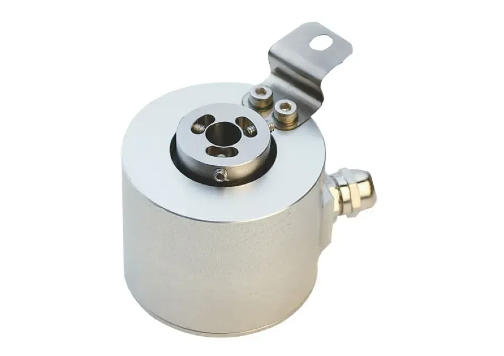
Electric vehicle motors operate under conditions that demand both precision and robustness. Brushless resolvers are particularly well-suited for this role for several reasons:
EV motors require absolute position data to accurately control torque and rotor alignment. Brushless resolvers provide this feedback naturally, without requiring a homing sequence or reference reset. This ensures that the motor starts and operates correctly every time, improving efficiency and safety.
EVs often experience vibration, high temperatures, and exposure to contaminants such as dust or oil. Brushless resolvers are designed to withstand these conditions. Unlike optical encoders, which can fail if debris obstructs the sensor, resolvers continue to provide reliable data under adverse conditions.
Electric vehicle motors are expected to last hundreds of thousands of kilometers. Brushless resolvers, with no brushes or delicate optical components, have a long service life and require minimal maintenance. This aligns with EV manufacturers’ goals for durable and low-maintenance vehicles.
Resolvers produce continuous analog signals that allow the motor controller to make fine adjustments in real time. This smooth feedback reduces torque ripple, vibration, and noise, resulting in a more comfortable driving experience.
In automotive applications, sensor failure can have serious consequences. Brushless resolvers are extremely reliable and less likely to fail under extreme conditions, ensuring that EV motor control remains safe and predictable.
The integration of brushless resolvers into an EV motor control system involves several key components:
The Resolver Sensor: Attached directly to the motor shaft, it detects the rotor’s position.
Resolver-to-Digital Converter (RDC): Converts the resolver’s analog sine and cosine signals into digital data for the motor controller.
Motor Controller (Inverter): Uses the digital position data to regulate voltage and current to the motor windings, controlling speed, torque, and direction.
This closed-loop system ensures that the rotor is always aligned with the stator’s magnetic field, maximizing efficiency and minimizing energy loss. The combination of the brushless resolver and RDC enables precise field-oriented control (FOC), a method widely used in modern EVs for high performance.
Brushless resolvers are used in multiple parts of an electric vehicle’s powertrain:
The primary function of the resolver is to provide rotor position feedback to the traction motor controller. Accurate position data ensures smooth acceleration, efficient energy use, and stable regenerative braking.
In EVs with multi-speed transmissions, resolvers monitor gear and shaft positions. This feedback ensures seamless gear shifts, reducing wear and improving overall drivetrain efficiency.
Some EVs use electric power-assisted steering (EPAS). Brushless resolvers in steering motors provide precise feedback for torque and angle, enhancing vehicle handling and driver comfort.
Brushless resolvers are also used in auxiliary systems, such as electric compressors, pumps, or cooling fans. Their reliability ensures continuous operation in supporting subsystems that contribute to vehicle performance and safety.
Brushless resolvers are not the only option for EV motor feedback. Common alternatives include optical encoders and magnetic sensors. Each technology has advantages and trade-offs.
Optical Encoders: High precision and resolution, compact design, but sensitive to dust, vibration, and oil contamination. They are less suitable for harsh automotive environments.
Magnetic Sensors: Robust and simple, but generally less precise than resolvers and may suffer from temperature-related drift.
Brushless Resolvers: Provide absolute feedback, extreme durability, and smooth analog signals, making them ideal for EV motors in demanding environments.
In practice, resolvers are often preferred for traction motors, while encoders may be used in less harsh auxiliary systems where ultra-high resolution is needed.
Using brushless resolvers in EV motor control brings several tangible benefits:
Efficiency: Precise rotor position feedback enables optimal current flow, reducing energy loss.
Extended Battery Range: Improved motor efficiency translates to longer driving range on a single charge.
Smooth Driving Experience: Reduced torque ripple and vibration enhance ride comfort.
Reliability: High durability reduces maintenance needs and ensures consistent performance over the vehicle’s lifetime.
Safety: Absolute feedback and resistance to failure support robust vehicle control, critical for autonomous and driver-assist features.
While brushless resolvers are highly effective, their use comes with considerations:
Higher Cost: Compared to simple magnetic sensors, resolvers are more expensive upfront.
Signal Processing: The analog output requires an RDC to interface with digital controllers, adding complexity.
Size Constraints: Some resolver models are larger than compact magnetic or optical sensors, requiring careful integration.
Despite these factors, the long-term reliability, efficiency, and robustness of resolvers often justify the investment in EV applications.
The role of brushless resolvers in EVs is likely to expand as vehicle technology evolves. Key trends include:
Smaller, Lighter Resolvers: Advances in design are producing more compact sensors suitable for space-constrained motors.
Integration with Advanced Motor Controllers: Enhanced RDCs and digital interfaces allow smoother, faster control and simplified wiring.
Hybrid Feedback Systems: Some EVs combine resolvers with secondary sensors for redundancy and higher precision.
Autonomous and Connected Vehicles: As vehicles adopt autonomous driving features, reliable motor control feedback becomes even more critical, reinforcing the importance of brushless resolvers.
Brushless resolvers play a crucial role in electric vehicle motor control. By providing absolute, reliable, and continuous position feedback, they enable precise torque and speed control, efficient energy use, and smooth driving experiences. Their ruggedness ensures reliable operation in harsh automotive environments, making them a key enabler of EV performance and safety.
Compared to alternatives like optical encoders or magnetic sensors, brushless resolvers excel in durability and reliability, though they require signal conversion and may have higher upfront costs. For traction motors, steering systems, and other critical components, these advantages outweigh the challenges, making brushless resolvers a standard choice in the EV industry.
As electric vehicles continue to grow in popularity and technology advances, brushless resolvers will remain indispensable, supporting higher efficiency, longer battery life, and safer, smoother vehicle operation for years to come.