
T: +86-15800900153
E: songwenyan@windouble.com.cn
E: songwenyan@windouble.com.cn
No.1230, Beiwu Road, Minhang District,Shanghai,China
Views: 0 Author: Site Editor Publish Time: 2026-04-21 Origin: Site


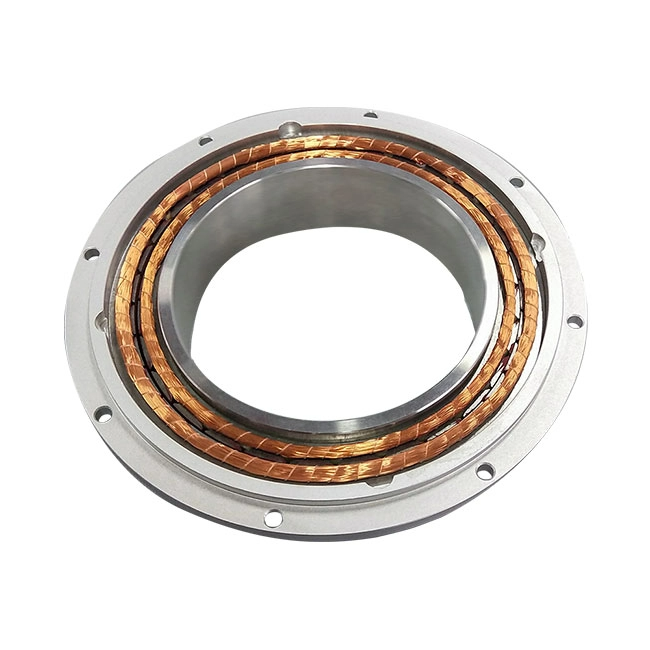
Transitioning from internal combustion engines to new energy powertrains represents more than a simple shift in fuel sources. It fundamentally requires mastering micro-second electronic control mechanisms. Modern Permanent Magnet Synchronous Motors (PMSM) and AC Induction Motors theoretically deliver up to 95-97% peak operational efficiency. However, realizing these impressive numbers during unpredictable real-world driving relies entirely on highly accurate rotor position feedback. Without precise rotational data, power management algorithms quickly lose synchronization. This causes immediate electrical waste.
For OEM powertrain engineers and specialized system integrators, utilizing a high-precision Electric Vehicle Drive Motor Sensor is no longer an optional upgrade. It stands as the absolute deciding factor in maximizing functional range. It also optimizes physical thermal limits while ensuring globally compliant safety standards. In this detailed breakdown, you will discover exactly how this vital hardware shapes everything from daily driving smoothness to extreme-weather traction control.
Efficiency: High-resolution sensors unlock the final 10-15% of range efficiency by eliminating inverter switching waste.
Safety & Performance: Sub-degree accuracy (e.g., <0.25°) enables instantaneous traction control at speeds exceeding 30,000 RPM.
NVH Optimization: Precise feedback loops suppress torque ripple, directly eliminating motor whine and judder for the end user.
Component Longevity: Real-time thermal mapping prevents magnet demagnetization in PMSM architectures.
Integration ROI: Modern modular sensors offer IP69K protection and standardized interfaces, reducing overall powertrain integration costs.
Automakers face strict constraints regarding battery cost and weight. Simply adding larger battery packs to increase range faces diminishing returns. Heavy batteries introduce massive weight penalties. This forces motors to work much harder. You cannot solve efficiency problems simply by scaling up battery chemistry. The most cost-effective path to real-world range extension is rigorous powertrain optimization.
The Electric Vehicle Drive Motor Sensor acts as the critical bridge between the Vehicle Control Unit (VCU) and the motor inverter. It translates physical rotor dynamics into actionable electrical data. The VCU continuously calculates driver demand. It sends these demands to the inverter. The inverter uses Pulse Width Modulation (PWM) to fire precise currents into the motor phase windings. Without instantaneous rotor position feedback, the inverter fires blindly. This creates magnetic drag and wastes significant energy.
Defining successful sensor integration requires measuring three distinct criteria:
Latency Reduction: The ability to transmit rotational data to the inverter in microseconds, eliminating phase lag during rapid acceleration.
Signal Accuracy Under EMI: Maintaining perfectly clear data streams despite extreme electromagnetic interference generated by high-voltage battery cables.
Packaging Footprint: Fitting seamlessly into highly dense, multi-in-one electric drive modules without requiring external cooling structures.
Precise angular position data allows the inverter to perfectly align the stator's magnetic field alongside the rotor. Electric motors generate optimal torque when these magnetic fields remain exactly perpendicular. If the fields drift out of alignment, the motor consumes battery power simply to overcome its own internal magnetic resistance.
Minimizing this specific phase-lag reduces wasted thermal energy. Modern electric drive modules must maintain critical 85-90%+ system efficiency over a much wider operating curve. Achieving sub-degree precision prevents misfired PWM pulses. Industry data indicates this optimization strategy alone reclaims previously lost energy. Efficient switching typically unlocks an additional 10-15% of functional range efficiency compared to poorly calibrated systems.
Next-gen Hairpin and Axial Flux motors aggressively push performance limits past 20,000 to 30,000 RPM. At these extreme rotational velocities, standard computational feedback loops fail. A slight delay in signal transmission translates to massive mechanical deviation. High speeds demand highly specialized hardware capabilities.
Ultra-low latency sensors track position deviations as tight as 0.25 degrees. This granular tracking allows for instantaneous torque adjustments at the wheel. Advanced safety features rely entirely on this micro-second validation. When a vehicle hits an ice patch, the VCU detects sudden RPM spikes. It immediately drops the torque output to prevent wheel-slip. This proactive safety response happens much faster than traditional mechanical differential systems.
Minute misalignments in electrical timing cause torque ripple. This ripple manifests physically within the drivetrain. Passengers feel it as an annoying cabin vibration. They also hear it as a high-frequency motor whine. Premium EV and HEV markets demand a completely silent, vibration-free cabin experience. Powertrain acoustics define luxury in the electric era.
A high-fidelity Electric Vehicle Drive Motor Sensor smooths the underlying torque delivery curve. It ensures phase currents transition cleanly. Eliminating sharp electrical transients directly suppresses mechanical resonance. Engineers no longer need to add heavy acoustic dampening materials to the vehicle chassis. The vibration is stopped at the source.
Heat remains the ultimate enemy of rare-earth magnets in PMSM setups. Pushing a motor too hard generates immense internal temperatures. These temperatures risk permanent demagnetization of the rotor components. Once demagnetization occurs, the motor permanently loses peak power and overall efficiency.
Integrated sensing feeds accurate, localized operational data back to the vehicle's thermal management suite. The system constantly analyzes rotational strain versus thermal output. It allows the main controller to throttle performance proactively. It can also trigger active liquid cooling mechanisms before threshold damage occurs. This constant operational oversight drastically improves the powertrain's long-term State of Health (SOH).
Legacy powertrain wiring introduced severe complexity. Older designs required massive cable harnesses. They suffered from frequent signal degradation. Modern, highly integrated sensor packages solve these scalability issues directly. They use standardized digital interfaces designed for rapid robotic assembly lines.
Top-tier sensors are designed specifically for extreme conditions. They feature IP69K ratings, guaranteeing high-pressure water and dust resistance. They also utilize ruggedized shielding against high-voltage EMI. This durable construction eases the overall burden on OEMs when packaging the electric drive module. The modules survive intense oil-cooling environments and harsh road conditions without early failure.
Powertrain architects frequently debate the merits of hardware-based sensored systems against algorithmic "sensorless" Field-Oriented Control (FOC). Objectively comparing these two methods reveals distinct operational compromises.
Sensorless systems save immediate bill-of-materials (BOM) cost. They reduce internal wiring complexity by estimating rotor position. They rely entirely on back-electromotive force (back-EMF) calculations. Software engineers favor this approach to streamline physical manufacturing.
However, implementation reality exposes serious functional gaps. Sensorless FOC struggles severely at zero-speed or extreme low-speed high-torque scenarios. If you attempt a hill-start with a heavy load, the motor generates zero back-EMF initially. The software essentially guesses the rotor position. Physical sensors provide fail-safe reliability. They deliver instant start-up torque validation. Software estimation cannot safely match this physical guarantee in a heavy two-ton vehicle.
Operational Metric | Hardware-Sensored FOC | Algorithm-Based Sensorless FOC |
|---|---|---|
Zero-Speed Torque Capability | Excellent (Instant physical data) | Poor (Relies on high-frequency injection) |
High-Speed Stability (>20k RPM) | Extremely stable (<0.25° error) | Prone to computational latency |
System EMI Immunity | Requires shielded cabling | Immune (No cables used) |
Fail-Safe Reliability | High (Hardware validated) | Moderate (Software estimation risks) |
Choosing the correct component partner defines your product timeline. OEMs and Tier-1 suppliers must deploy a strict evaluation framework when selecting a sensor partner. Treat the following checklist as a mandatory engineering baseline.
Resolution and Accuracy: Does the sensor maintain fractional-degree accuracy across the full RPM band? Check validation logs at 20,000+ RPM. Performance drops at high speeds ruin inverter efficiency.
Thermal Tolerance: Can the components withstand the localized heat of highly compact, oil-cooled drive modules? Stators reach extreme temperatures under heavy continuous load. The sensor materials must survive without signal drift.
Protocol Compatibility: Does it support standard automotive communication protocols? Ensure it includes built-in ASIL (Automotive Safety Integrity Level) compliance. ASIL-C or ASIL-D certification is critical for traction motors.
Supply Chain Stability: Is the vendor capable of scaling alongside global EV production demands? Prototype success means nothing if the supplier cannot deliver massive yearly volumes on time.
To visualize how critical precision is, review the chart below detailing estimated efficiency drops tied to latency errors.
Rotor RPM | Signal Delay (µs) | Phase Lag Angle | Efficiency Loss Penalty |
|---|---|---|---|
10,000 RPM | 1 µs | 0.06° | Minimal (<0.5%) |
20,000 RPM | 5 µs | 0.60° | Noticeable (Up to 2%) |
30,000 RPM | 10 µs | 1.80° | Severe (Exceeds 5%) |
This chart clearly illustrates why hardware selection scales in importance as motor speeds increase in newer vehicle architectures.
An Electric Vehicle Drive Motor Sensor is a minor component by weight. However, it operates as a foundational pillar for safety, efficiency, and driving dynamics in new energy vehicles. Without it, modern inverters cannot perform efficiently. Powertrain engineers should continuously demand rigorous validation data. Encourage your architectural teams to request EMI testing reports or prototype integration kits from potential sensor suppliers before locking in next-generation motor designs. Validating physical hardware early prevents catastrophic software delays later in the development cycle.
A: Modern ASIL-compliant systems utilize built-in redundancy to handle hardware failures. If the primary sensor feed drops, the Vehicle Control Unit immediately triggers a "limp-home" software protocol. It shifts to a sensorless estimation algorithm. This safely limits maximum torque and top speed. It allows the driver to pull over or reach a service center safely without completely losing vehicular control.
A: Yes. While the fundamental goal is position tracking, calibration differs entirely. Permanent Magnet motors require absolute angular precision to match permanent magnetic poles. Reluctance motors rely on extremely complex algorithmic models based on magnetic resistance paths, demanding specific high-frequency sensor calibrations. Induction motors are slightly more forgiving but still require tailored sensor protocols for optimal slip-control.
A: Sensor accuracy dictates inverter efficiency. When the sensor reports sub-degree accurate data, the inverter applies electrical current at the perfect microsecond. This minimizes phase-lag and reduces wasted heat energy during switching. By virtually eliminating this switching loss, the vehicle preserves overall battery capacity. This preserved capacity directly translates into 10-15% more real-world driving range per charge.