
T: +86-15800900153
E: songwenyan@windouble.com.cn
E: songwenyan@windouble.com.cn
No.1230, Beiwu Road, Minhang District,Shanghai,China
Views: 0 Author: Site Editor Publish Time: 2026-04-21 Origin: Site


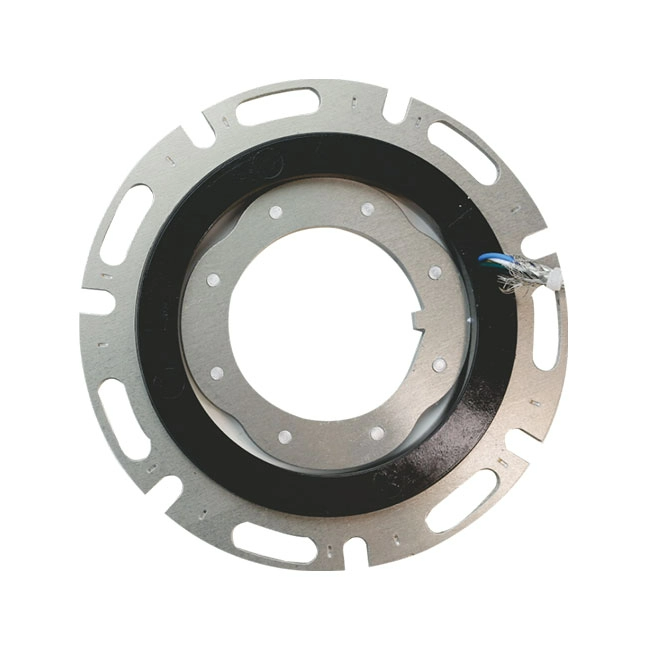
Standard motion control sensors frequently fail in surface and underground mining environments. Extreme shock, heavy vibration, and particulate contamination destroy delicate internal components almost daily. When these sensors break, the business impact is severe. Losing speed and direction feedback on traction motors, crushers, or hoists triggers catastrophic equipment damage. It creates dangerous safety hazards and causes thousands of dollars in unplanned downtime. You need a robust solution built for these brutal realities.
A Variable Reluctance Resolver eliminates the common failure points found in traditional encoders. It also outperforms standard wound-rotor resolvers. By removing fragile optics and delicate brushes, this technology provides a highly durable, brushless solution. It delivers precise motor control feedback under the harshest conditions. You will learn exactly how these sensors maximize reliability. We will explore their internal mechanics, compare them to standard encoders, and outline critical deployment steps for your heavy machinery.
Brushless Durability: Variable Reluctance (VR) Resolvers feature a passive rotor with no electrical windings, eliminating brush wear and slip ring failures common in standard resolvers.
Environmental Immunity: The lack of sensitive optics or onboard electronics makes VR resolvers highly resistant to coal dust, mud, extreme temperatures, and heavy vibration.
Accurate Motor Control: By measuring magnetic flux variations, these resolvers deliver continuous, absolute position and speed data critical for high-torque mining applications.
Mining operators often underestimate the vulnerability of standard feedback devices. Traditional optical encoders rely on etched glass or plastic disks. These fragile components sit perilously close to heavy rotational forces. When a massive continuous miner strikes a tough rock seam, the resulting shockwaves travel directly through the motor shaft. Glass optical disks frequently shatter under this sudden mechanical stress. Furthermore, underground mines generate pervasive fine coal dust. Even tiny amounts of particulate ingress can blind an optical sensor. Once dust coats the internal reader, the sensor stops sending speed feedback immediately.
Standard wound-rotor resolvers present different but equally frustrating limitations. These legacy devices use internal copper windings on the rotating shaft. To transfer electrical signals from the spinning rotor to the stationary housing, they rely on physical brushes and slip rings. This mechanical contact point creates a severe vulnerability. Continuous vibration in haul trucks causes brush bounce. This bouncing interrupts the electrical signal, leading to erratic motor control. Additionally, rapid temperature fluctuations cause these contact points to oxidize and degrade over time. You eventually face inevitable mechanical failure.
The true penalty of a sensor failure goes far beyond the replacement part price. You must consider the cascading impact of halted production. If a primary hoist stops working due to a failed encoder, the entire extraction process grinds to a halt. Field maintenance in remote locations complicates the recovery effort. Dispatching a technician to a subterranean site requires extensive safety protocols and valuable labor hours. Every hour of lost production heavily impacts your site profitability. Preventing these failures requires upgrading to a fundamentally tougher technology.
A Variable Reluctance Resolver achieves extraordinary durability through its specialized passive rotor architecture. Unlike traditional models, it completely eliminates rotating electrical coils. All primary excitation coils and secondary receiver coils are safely encapsulated within the stationary stator. The rotor itself is merely a specially shaped piece of solid ferromagnetic steel. Because the rotor contains no wires, no circuits, and no fragile joints, it essentially becomes immune to rotational fatigue.
These devices calculate speed and direction by precisely measuring magnetic flux variation. As the motor shaft turns, the specialized solid rotor spins inside the stator housing. This movement generates specific changes in the magnetic field.
The drive sends a high-frequency AC excitation signal into the stationary primary coil.
This signal creates a constant electromagnetic field across the internal air gap.
The lobed steel rotor spins through this magnetic field.
The varying distance between the rotor lobes and the stator coils changes the magnetic reluctance.
This shifting reluctance modulates the amplitude of the signal induced in the secondary coils.
The drive interprets these continuous sine and cosine voltage fluctuations to determine precise shaft position.
This electromagnetic approach guarantees exceptional signal continuity. Mechanically wearing components degrade over time, but magnetic fields do not. The solid-state nature of the stator windings ensures high-fidelity feedback. You receive uninterrupted, real-time data regardless of internal particulate buildup or external mechanical shock. By removing physical contact from the signal generation process, this resolver delivers a theoretically infinite mechanical lifespan.
Selecting the right feedback sensor requires rigorous evaluation against mining-specific environmental factors. You must analyze mechanical limits, thermal ceilings, and electrical resolution capabilities.
Your sensors must survive punishing physical environments. Assess the shock and vibration tolerances using established frameworks like MIL-STD-810G or similar heavy industry standards. A standard optical encoder might survive 50G of shock. In contrast, a ruggedized VR resolver easily withstands 200G of shock and severe broadband vibration. You must also evaluate sealing capabilities. Heavy machinery operates in corrosive fluids, deep mud, and abrasive rock dust. Look for IP68 or IP69K ingress protection ratings. These ratings guarantee the internal stators remain protected even during high-pressure washdowns or full submersion in slurry.
Heavy-duty traction motors generate immense heat during steep inclines or heavy load hauling. Standard onboard electronics degrade rapidly when ambient temperatures exceed 85°C. Traditional encoders often fail in these zones because their internal LEDs and microchips literally melt. A Variable Reluctance Resolver contains no active electronics. It relies entirely on copper wire and steel laminations. Consequently, these resolvers operate safely in environments exceeding 150°C. They easily handle extreme heat without experiencing any thermal degradation of the feedback signal.
You must match the resolver specifications to your motor drive control loop requirements. Low-speed, high-torque maneuvers demand highly accurate position feedback. When evaluating these devices, pay close attention to the pole count. A multi-pole VR resolver provides higher electrical resolution per mechanical revolution. For example, pairing a 6-pole resolver with a 6-pole traction motor ensures perfect electrical alignment. This synchronization delivers the smooth, jitter-free torque necessary for moving massive loads from a dead stop.
Understanding the fundamental technology differences helps clarify why mining engineers prefer reluctance-based feedback. Traditional rotary encoders generate digital pulses using optical readers or sensitive magnetic chips. They offer exceptional laboratory-grade accuracy. However, they sacrifice structural integrity to achieve it. VR resolvers utilize magnetic reluctance. They provide an analog signal derived from robust physical steel interacting with electromagnetic fields.
Feature | Variable Reluctance Resolver | Traditional Rotary Encoder |
|---|---|---|
Core Technology | Electromagnetic induction via passive steel rotor. | Optical scanning or active magnetic chips. |
Onboard Electronics | None. Fully passive device. | Complex PCBs, LEDs, and photodetectors. |
Vibration Tolerance | Extremely High (Up to 200G+ shock). | Low to Moderate (Glass shatters, PCBs crack). |
Temperature Range | -55°C to +150°C (or higher). | -20°C to +85°C typically. |
Failure Mode | Gradual, predictable mechanical bearing wear. | Sudden, catastrophic electronic or optical failure. |
Failure modes differ drastically between these two technologies. Encoders typically fail suddenly. An LED burns out, or a glass disk cracks, instantly blinding the motor controller. This sudden loss of feedback causes the drive to fault, halting the machine abruptly. VR resolvers degrade predictably. Because they are solid-state and passive, they generally survive indefinitely unless the heavy-duty bearings finally wear out. You can monitor bearing health through standard vibration analysis. This allows you to schedule maintenance during planned outages rather than reacting to emergency breakdowns.
When analyzing maintenance frequency and uptime, the advantages become clear. You might face higher upfront engineering and integration effort for analog resolvers. However, you must balance this against the constant replacement frequency of fragile encoders. Heavy machinery requires continuous operation. Reducing the frequency of emergency field maintenance saves massive amounts of manual labor. Over time, maximizing your MTBF (Mean Time Between Failures) provides immense operational advantages.
Upgrading to a ruggedized analog sensor requires careful engineering. You must address electrical compatibility, environmental noise, and mechanical fitment to ensure a successful deployment.
VR resolvers output an analog AC signal. This signal differs slightly from standard wound resolvers and completely differs from digital encoder pulses. Your motor controller must accurately interpret this data. Assessing drive compatibility is your first critical step. Ensure your existing Variable Frequency Drives (VFDs) natively support variable reluctance signals. If they do not, you will require a specific Resolver-to-Digital (R/D) converter. This specialized chip tracks the analog sine and cosine waves. It then converts them into the digital quadrature pulses your motor controller expects. Always verify the R/D converter tracking rate matches your maximum motor RPM.
Mining environments present massive electrical noise risks. High-voltage draglines, giant crushers, and massive traction drives generate severe electromagnetic interference. This EMI can distort the low-voltage analog signals traveling from the resolver back to the drive panel. You must implement aggressive mitigation strategies to protect signal integrity.
Use twisted-pair wiring: Twist the sine, cosine, and excitation wires to cancel out induced magnetic noise.
Implement heavy shielding: Utilize cables with heavy braided copper shields. This acts as a Faraday cage around the sensitive analog signals.
Follow strict grounding protocols: Ground the cable shield at the drive end only. Grounding both ends creates ground loops, which introduce massive electrical noise into the control loop.
Separate cable routing: Never run resolver feedback cables in the same conduit as high-voltage motor power lines. Keep them physically separated.
Replacing a legacy encoder often presents mechanical retrofitting challenges. You must carefully address physical mounting requirements. Resolvers require precise shaft alignment to maintain concentricity. Excessive runout (wobble) alters the internal air gap between the stator and rotor. This wobble degrades signal accuracy. When upgrading legacy equipment, you may need custom adapter plates. These plates ensure the new sensor housing mates perfectly to the old motor bell. Always verify the shaft diameter and specify appropriate flexible couplings. Proper mechanical installation prevents premature bearing failure and guarantees long-term accuracy.
Choosing the right feedback device dictates the reliability of your heavy mining machinery. A Variable Reluctance Resolver stands out as the optimal choice for brutal environments. It shines when MTBF and environmental survival easily outweigh the need for ultra-high-resolution laboratory accuracy. Its passive, brushless design ignores shock, heat, and dust.
When shortlisting vendors, apply strict criteria. Prioritize manufacturers offering robust stator encapsulation and heavy-duty bearings. Ensure they provide appropriate pole configurations that perfectly match your traction motors. Look for extensive, proven field history in heavy mobile equipment.
Your next action requires an internal audit. Audit your current motor drive compatibility for R/D conversion capabilities. Identify which VFDs require external converter cards. Finally, request an engineering sample or a detailed 3D CAD model from your chosen vendor. Use this model to evaluate mechanical fitment and adapter plate requirements on your existing equipment.
A: Standard resolvers have electrical windings on the rotating part (rotor). These require vulnerable brushes or rotary transformers to transfer signals. Variable Reluctance Resolvers utilize a solid, passive metal rotor. They house all sensitive electrical windings safely on the stationary stator. This vastly increases durability by eliminating wear parts.
A: Yes. They rely entirely on magnetic fields rather than optical light paths. They also lack sensitive internal electronics like microchips. Properly encapsulated VR resolvers can operate reliably even when completely submerged in water or heavily coated in mud and debris.
A: Yes. The output is an analog AC signal. This signal differs slightly from standard wound resolvers and digital encoders. Your motor drive must feature a compatible Resolver-to-Digital (R/D) converter. This specific converter is designed to interpret variable reluctance signals accurately.