In today's industrial landscape, collaborative robots (cobots) are transforming production lines, laboratories, and even healthcare settings by working safely alongside humans. To achieve fluid, precise, and repeatable movements, cobots rely on high-performance position sensors that are compact, lightweight, and highly reliable. Among the available feedback devices, housed resolvers—magnetic rotary transformers enclosed in rugged metal casings—are rapidly gaining popularity for their ability to deliver absolute, brushless feedback under demanding conditions.
1. Collaborative Robots and the Need for Lightweight, Compact, and Safe Sensors
1.1 The Rise of Cobots in Modern Automation
Collaborative robots—or cobots—are designed to share workspace with human operators without guarding fences or safety cages. This new paradigm requires robots to be inherently safe, responsive, and versatile. Key design priorities include:
Lightweight Arms and End Effectors To minimize kinetic energy in case of unintended contact, cobot links are constructed from aluminum or carbon composites, with each joint optimized for low inertia.
Compact Footprint Cobots often operate on crowded factory floors or laboratory benches; their joints and sensors must fit within tight spatial envelopes.
High Safety Standards ISO 10218-1 and ISO/TS 15066 define safety requirements for robot design and operation, including maximum allowable forces and speeds upon contact with humans.
These priorities impose stringent demands on position-feedback sensors. Traditional optical encoders or large resolvers add weight, bulk, and require protective enclosures. In contrast, a micro housed resolver combines absolute feedback with an all-metal, sealed package that can be integrated directly into slim joint housings.
1.2 Sensor Requirements for Collaborative Applications
Effective cobot operation hinges on:
Absolute Position Accuracy Each joint must know its angle instantly, even after a power cycle, to resume tasks without homing moves.
Low Mass and Small Size Every gram of added sensor mass increases energy consumption and reduces dynamic performance.
Electrical and Mechanical Safety Sensors must meet strict insulation, grounding, and mechanical-fail safety standards.
Robustness in Human-Centered Environments Cobots often work near welding stations, pneumatic actuators, or drilling machines—sources of EMI and vibration.
Housed resolvers tick all these boxes by offering brushless, absolute analog outputs in an IP-rated metal enclosure that isolates internal windings from external contaminants and mechanical shock.
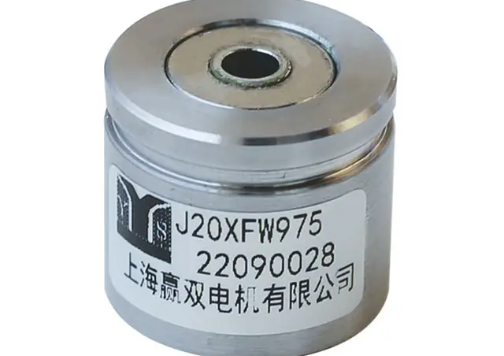
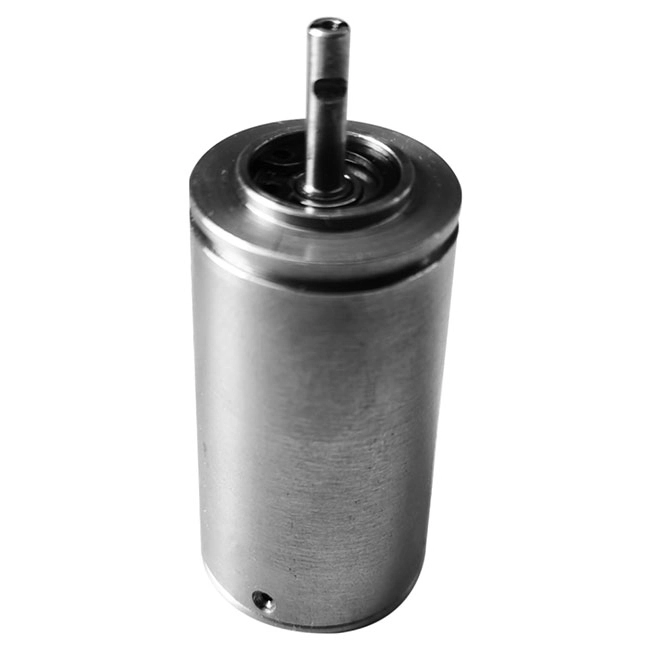
To address the unique demands of cobots, Windouble developed a micro housed resolver series specifically engineered for minimal size and mass without sacrificing performance. Key structural advantages include:
2.1 Ultra-Compact Housing Design
Diameter as Small as 12 mm Windouble's micro series features resolvers with outer diameters down to 12 mm and lengths under 20 mm—small enough to nest inside thin robot wrist modules.
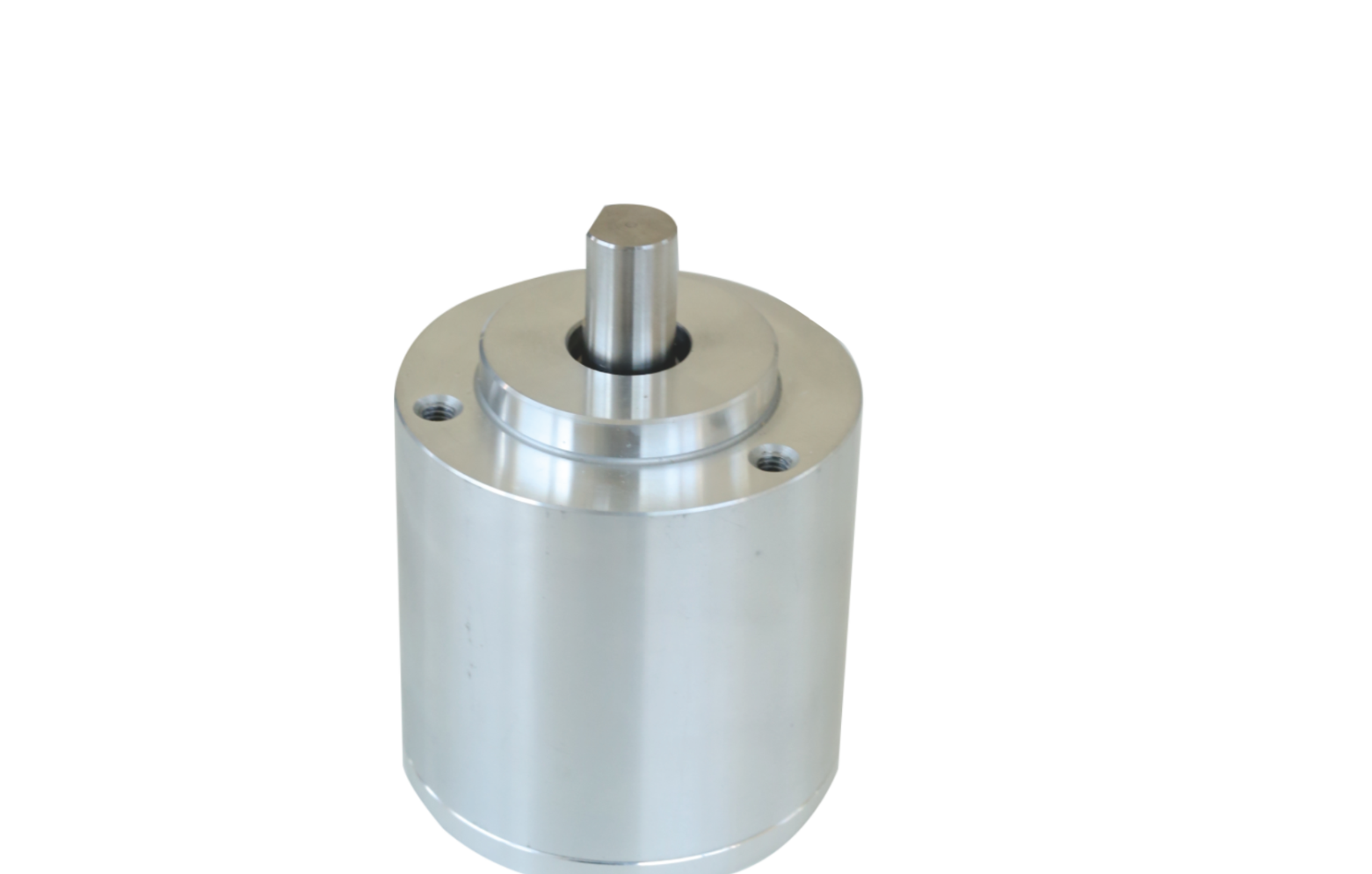
Slim Flange Options Low-profile flanges allow direct mounting to hollow-shaft brushless servomotors commonly used in cobot joints, eliminating bulky adapter plates.
Integrated Connector Glands Miniature IP67-rated cable glands and micro-D connectors are built into the housing, streamlining cabling and preventing snag hazards.
2.2 Lightweight Construction
Aluminum and PEEK Composite Mix Windouble balances strength and weight by machining housings from aerospace-grade aluminum and selectively using PEEK polymer inserts in non-load areas.
Epoxy-Bonded Windings Fine enamel copper windings are potted in low-stress epoxy, securing coils against vibration while adding minimal mass.
A fully assembled micro resolver weighs less than 10 grams—nearly imperceptible in a cobot's overall weight budget yet delivering robust, absolute feedback to within ±10 arcminutes.
3. Indirect Role in Force-Control Feedback and Flexible Joints
While housed resolvers primarily provide angular position, their high-integrity signals are a cornerstone of advanced force-control and compliance functions in modern cobots.
3.1 Force-Torque Estimation via Position Differentiation
Dynamic Compliance By tracking minute deviations between commanded and actual positions—derived from resolver outputs—controllers can infer external forces applied to the arm.
Soft Grasping In pick-and-place or assembly tasks, robots adjust grip force when sensing slight deflections, preventing component damage.
Collision Detection Rapid detection of unplanned motion resistance triggers safe stop routines faster than any external sensor array.
Accurate resolver feedback ensures these force-control loops are reliable, responsive, and stable, enabling cobots to safely share workspaces with operators.
3.2 Enabling Flexible Joint Architectures
Series Elastic Actuators (SEAs) Some cobots use SEAs that include a compliant spring element between motor and output link. Resolver feedback on both motor and output shafts allows precise control of joint stiffness.
Variable Stiffness Modules Dual-resolver setups feed back motor angle and link deflection, enabling software-tunable stiffness for tasks ranging from delicate assembly to heavy-payload handling.
Windouble micro housed resolvers, with their absolute outputs and minimal axial footprint, integrate seamlessly into these compact SEA designs, empowering next-gen cobot joints.
4. EMI Immunity and Thermal Behavior under High-Frequency, Multi-Tasking Scenarios
Cobots often carry out rapid, repeated motions across multiple axes simultaneously. Under these conditions, sensors face two critical challenges:
Electromagnetic Interference (EMI)
Thermal Drift from Continuous Operation
4.1 Transformer-Based Immunity to EMI
Inductive Signal Generation Unlike optical encoders that rely on light sensors and digital signals, resolvers transmit analog sine and cosine voltages via electromagnetic coupling. These transformer-based signals inherently reject common-mode and high-frequency noise.
Shielded Metal Housing The resolver's aluminum shell doubles as an EMI shield, protecting internal coils from external fields generated by servo drives or nearby welding equipment.
Filtered Excitation Lines Windouble specifies excitation frequencies and recommends inline inductors and capacitors for further noise suppression—critical in cobot bases with high-current busbars.
In real-world tests, resolver signal-to-noise ratios exceed 60 dB even within 10 cm of high-power induction motors, ensuring reliable motion control despite electrical noise.
4.2 Managing Thermal Effects in Continuous Duty
Low-Thermal-Coefficient Materials Windouble employs specialized copper alloys and thermally stable epoxies to minimize winding resistance change over temperature.
Embedded Temperature Sensing (Optional) Select micro resolver models include a small thermistor in contact with the winding pack, feeding temperature data to the controller for dynamic compensation.
Thermal Simulation and Testing Each resolver design undergoes finite-element thermal modeling and real-world burn-in at up to 120 °C for 1,000 hours, ensuring signal stability under continuous high duty cycles.
This rigorous approach guarantees that even during sustained high-speed cyclic movements—common in multi-tasking cobot operations—resolver outputs remain accurate and drift-free.
5. Case Study: International Cobot Brand Integrates Windouble Micro Housed Resolvers
5.1 Project Background
A leading European cobot manufacturer sought to enhance the payload and performance of its next-gen 6-axis collaborative arm. The design goals included:
Reducing Joint Inertia by 15%
Maintaining ±0.1° Repeatability
Simplifying Joint Packaging for Easier Maintenance
Previous iterations used miniature optical encoders that required protective covers and periodic cleaning—untenable for long-term reliability.
5.2 Implementation of Windouble's Micro Resolvers
Sensor Selection The project team opted for Windouble's Model WDR-M12 micro housed resolver, featuring a 12 mm diameter, IP67 rating, and ±10 arcminute accuracy.
Mechanical Integration Custom low-profile flanges were machined to match the cobot motor face. The resolver's built-in micro-D connector fed directly into the arm's internal wiring harness.
Control System Adaptation Resolver outputs connected to a compact RDC module placed inside the joint base, with digital position data streamed over CANopen to the robot controller.
5.3 Performance Outcomes
Weight Reduction Replacing optical encoders shaved 25 grams per joint, cumulatively reducing arm inertia by 18%.
Improved Reliability After 12 months in mixed-environment factory testing, resolver-equipped arms showed zero sensor-related failures, compared to three encoder faults in the prior design.
Enhanced Safety The absolute feedback eliminated homing routines on power-up, ensuring consistent joint behavior during manual guidance and reducing unexpected movements.
This successful integration demonstrates how Windouble's micro housed resolvers enable cobots to achieve higher performance, lower maintenance, and enhanced safety—key selling points in a competitive market.
Conclusion
In the evolving field of collaborative robotics, accuracy, compactness, and reliability are non-negotiable. Windouble's micro housed resolvers deliver on all fronts:
Absolute, Brushless Feedback: No homing, no mechanical contact, zero wear.
Ultra-Compact and Lightweight: Seamless integration into slim, low-inertia cobot joints.
Robust EMI Immunity and Thermal Stability: Reliable signals amid high-frequency multi-axis motion and electrical noise.
Indirect Support for Force Control and Compliance: Enabling sensitive, human-friendly interaction.
By partnering with Shanghai Yingshuang (Windouble) Electric Machinery Technology Co., Ltd., cobot designers gain access to state-of-the-art resolver technology backed by rigorous testing, flexible customization, and global support. If you are engineering the next generation of collaborative robots, consider micro housed resolvers as the key to unlocking safer, more precise, and more efficient motion control.
Ready to optimize your robot's performance? Visit www.windoublesensor.com to explore our micro housed resolver portfolio, download datasheets, or request a customized sample for your project.