
T: +86-15800900153
E: songwenyan@windouble.com.cn
E: songwenyan@windouble.com.cn
No.1230, Beiwu Road, Minhang District,Shanghai,China
Views: 0 Author: Site Editor Publish Time: 2026-06-12 Origin: Site


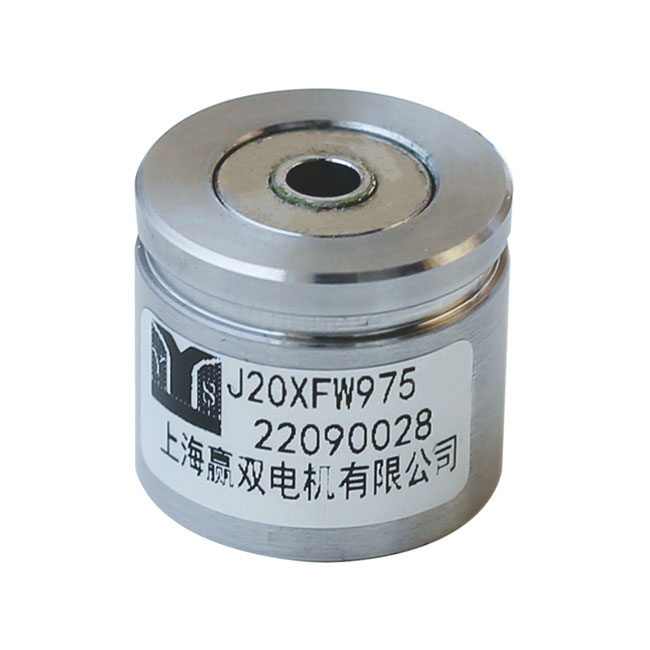
The shift toward direct-drive motors and compact robotics requires angular position sensors capable of operating in harsh environments without adding axial length. Traditional housed encoders often introduce excessive mechanical bulk. They also suffer from inherent bearing wear and face serious thermal limitations. These constraints compromise system reliability in highly demanding applications. Frameless single-speed resolvers offer a robust, elegant solution. They provide native absolute position data over a full 360-degree rotation. Engineers can integrate them directly into the motor assembly. This approach ensures maximum reliability inside a standardized Size 20 form factor. This article serves as a technical evaluation framework. We provide engineers and system architects the necessary tools to evaluate these components. You will learn how to select and specify these sensors effectively. By understanding mechanical footprints, environmental tolerances, and signal conditioning requirements, you can optimize your next space-constrained application.
Form Factor Advantage: Size 20 (approx. 2.0-inch / 50.8mm OD) frameless designs eliminate bearings and housings, reducing overall motor footprint and mechanical compliance issues.
Absolute Position Native: Single-speed (1X) configurations provide absolute position feedback within one mechanical revolution without requiring complex homing routines.
Harsh Environment Durability: Inductive transformer-based operation ensures high tolerance to shock, vibration, dust, and extreme temperature fluctuations.
Integration Trade-offs: Achieving optimal accuracy requires strict control over rotor-to-stator mounting concentricity and proper pairing with a Resolver-to-Digital Converter (RDC).
Modern servomotors demand highly optimized mechanical envelopes. The Size 20 form factor features an approximate outer diameter of 2.0 inches (50.8mm). This specific dimension serves as the industry sweet spot for medium-torque servomotors. It balances sufficient magnetic core volume for strong signal generation against tight spatial constraints. When you specify a Frameless Resolver Single Speed Size 20 Series, you leverage a globally recognized standard. Robotic joint actuators and aerospace gimbals benefit immensely from this size. The components fit perfectly around standard motor shaft diameters while keeping the outer stator housing extremely compact.
Single-speed resolvers deliver a direct 1:1 relationship between electrical degrees and mechanical degrees. One full mechanical rotation generates exactly one complete electrical sine wave cycle. This configuration guarantees an immediate absolute position reading at power-on. Your system knows its exact rotor angle the millisecond you apply power. Complex homing routines become completely unnecessary. Safety-critical systems require this instantaneous feedback. For example, electronic power steering (EPS) and surgical robotic arms cannot afford blind movements during startup. Single-speed units prioritize this crucial safety feature over the subdivided resolution of multi-speed variants.
Housed sensors contain internal bearings and dedicated shafts. Frameless architectures separate the rotor and stator into independent components. You mount the rotor directly to the host motor shaft. You press-fit the stator directly into the motor housing. This hollow shaft design delivers massive mechanical advantages. It eliminates the need for flexible couplings. Flexible couplings introduce backlash and hysteresis into the control loop. Removing them improves the system resonance frequency significantly. Furthermore, a frameless design reduces the overall rotational mass. Lower inertia translates directly into faster motor acceleration and superior dynamic response.
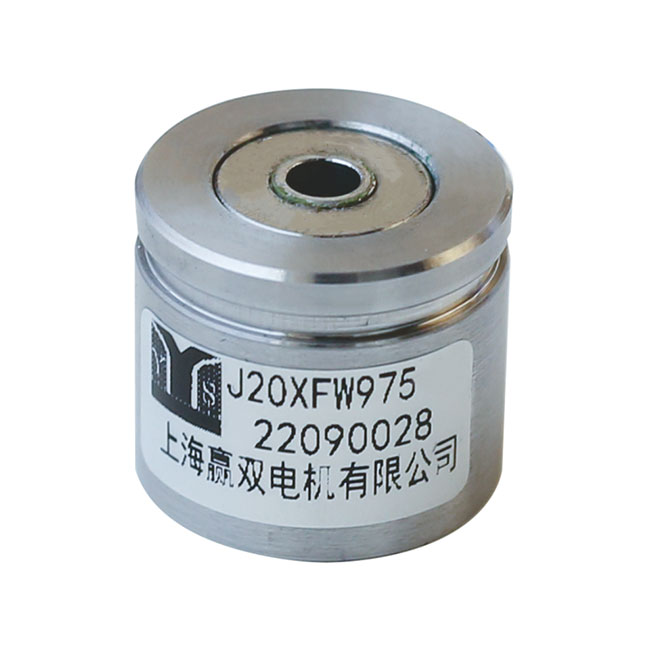
Evaluating electrical error remains a primary task for sensor specification. Manufacturers typically measure resolver accuracy in arcminutes. A standard Size 20 unit often achieves ±10 to ±20 arcminutes of electrical error. Transformation ratio is another critical metric. It represents the ratio of the output voltage to the input excitation voltage. Most industrial resolvers use a transformation ratio of 0.5. You must ensure this ratio aligns perfectly with your chosen excitation circuitry to prevent signal clipping or poor signal-to-noise ratios.
Resolvers dominate harsh environments because they rely entirely on inductive electromagnetic coupling. They contain no delicate optical glass or sensitive electronic chips inside the sensing head. Operating temperature ranges routinely extend from -55°C up to +155°C. Some specialized aerospace versions push beyond +200°C. Additionally, resolvers offer exceptional immunity to electromagnetic interference (EMI). Motor housings generate intense EMI due to pulse-width modulation (PWM) switching. The differential nature of sine and cosine signals effectively cancels out common-mode noise.
A resolver acts as a rotary transformer. It requires a high-frequency AC excitation signal applied to its primary winding. Typical excitation frequencies range from 4 kHz to 10 kHz. You must match the resolver's primary winding requirements to the capabilities of your Resolver-to-Digital Converter (RDC). Mismatched frequencies induce severe phase shifts. They also draw excessive current, which generates unwanted heat. Properly tuning the excitation parameters minimizes phase lag and ensures highly accurate analog-to-digital conversion.
Agile direct-drive motors require minimal rotor inertia. Assessing the impact of the resolver's rotor mass is essential. A Size 20 frameless rotor typically weighs very little compared to the main motor armature. However, in highly dynamic applications like pick-and-place robots, every gram matters. The frameless design keeps the mass concentrated near the axis of rotation. This geometry inherently minimizes the added moment of inertia.
| Parameter | Typical Size 20 Range | Engineering Implication |
|---|---|---|
| Accuracy | ±10 to ±20 arcminutes | Defines maximum absolute positioning error under ideal mounting conditions. |
| Transformation Ratio | 0.5 ± 10% | Determines output voltage amplitude; crucial for RDC input stage matching. |
| Operating Temp | -55°C to +155°C | Allows integration directly against hot motor windings without failure. |
| Excitation Frequency | 4 kHz to 10 kHz | Affects phase shift and control loop update rates. |
The primary trade-off between single-speed and multi-speed resolvers revolves around absolute positioning versus ultimate precision. Multi-speed resolvers utilize multiple pole pairs. They generate several electrical cycles per mechanical revolution. This multiplies the effective resolution and reduces mechanical error impacts. However, multi-speed units lose the single-turn absolute position capability. The system cannot distinguish which pole pair it currently reads upon power-up without a secondary coarse sensor. Single-speed architectures prioritize immediate, absolute startup data over sub-arcminute precision.
Engineers must evaluate alternative technologies to validate their design choices. The chart below summarizes how frameless resolvers compare against competing solutions.
| Sensor Type | Strengths | Weaknesses | Best Fit Application |
|---|---|---|---|
| Single-Speed Resolver | Absolute 360° position, extreme durability, wide temperature range. | Requires RDC chip, moderate precision compared to optical. | Safety-critical motors, aerospace, heavy industrial robotics. |
| Multi-Speed Resolver | High precision, identical environmental durability. | Lacks absolute startup position across 360°. | High-precision CNC spindles, continuous rotation systems. |
| Optical Encoder | Exceptional resolution, native digital output, zero RDC latency. | Fails in heavy vibration, oil, dust, and extreme heat. | Clean room automation, laboratory equipment. |
| Magnetic ICs | Extremely low component price, very small physical footprint. | Struggles with external magnetic interference, temperature drift. | Consumer electronics, light-duty automotive actuators. |
Resolvers survive heavy vibration, oil, and dust effortlessly. Optical encoders utilize delicate glass or plastic disks. Contaminants easily block the optical pathways, causing catastrophic signal loss. Heavy shocks can shatter optical components. Conversely, optical encoders provide much higher native digital resolution. They output digital pulses directly, eliminating RDC processing latency. You choose resolvers when environmental survival supersides the need for millions of counts per revolution.
Inexpensive magnetic sensors, such as 40-cent Hall-effect ICs, dominate low-end applications. They suit consumer appliances perfectly. However, inductive resolvers provide unmatched structural rigidity. They offer superior temperature stability because their copper windings drift predictably. Industrial and automotive compliance standards often require deep redundancy. Resolvers provide the robust physical foundation necessary to pass stringent safety certifications like ISO 26262.
Frameless designs transfer the burden of bearing alignment entirely to the user. This represents the most significant integration risk. Stator concentricity and rotor runout directly dictate final system accuracy. If you mount the rotor off-center, you create cyclical accuracy deviations. Engineers refer to these as once-per-revolution errors.
To mitigate this risk, you must maintain strict machining tolerances on your motor shaft and housing. Total Indicator Reading (TIR) for the rotor mounting surface should typically remain below 0.025 mm. Precision grinding of the shaft ensures the resolver rotor rotates perfectly true relative to the stator.
Resolvers output analog sine and cosine signals. Your microcontroller requires digital angle data. An RDC chip bridges this gap. RDCs use a phase-locked loop (PLL) tracking algorithm to convert these signals dynamically.
You must evaluate the PLL tracking rates carefully. Ensure the RDC can handle your motor's maximum operational RPM without signal degradation. If the motor accelerates faster than the PLL can track, the system loses position data. Managing phase shift between the excitation signal and the outputs is also critical.
Route resolver cables as far away from motor phase power wires as physically possible.
Use heavily shielded, twisted-pair cables for the sine, cosine, and excitation lines.
Ground the cable shield at one end only to prevent ground loops.
Implement software filtering to reject high-frequency PWM switching noise.
Static mechanical mounting deviations always exist, regardless of machining precision. Software-side error mapping becomes a necessity for high-accuracy applications. During final assembly, the controller slowly rotates the motor. It records the resolver output and compares it against a highly accurate reference encoder attached temporarily. The system generates an error compensation table. The microcontroller uses this table to correct cyclical deviations in real time.
Selecting the right component requires a structured approach. Use the following steps to evaluate and specify your frameless sensor.
Define Success Criteria: Determine if absolute position at startup is a strict safety requirement. If the system must know its position immediately upon waking, you mandate a single-speed configuration. Document the maximum acceptable electrical error in arcminutes.
Verify Mechanical Fit: Cross-reference your motor shaft diameter against the inner bore options of the rotor. Review the stator housing space against standard Size 20 mechanical drawings. Ensure you have sufficient axial depth to accommodate the winding end-turns.
Analyze the Supply Chain: Evaluate manufacturers based on component traceability. Request testing documentation, such as automated error mapping reports per unit. Understand the lead times for standard off-the-shelf units versus custom winding configurations.
Execute Proof-of-Concept Steps: Do not jump straight to final integration. Procure evaluation kits first. Combine the Size 20 resolver with an optimized RDC board. Validate the accuracy claims on a test bench under simulated load and temperature conditions.
Frameless single-speed Size 20 resolvers offer a highly reliable solution for absolute position tracking. They integrate mechanically directly into the host structure, thriving in unforgiving environments where traditional sensors fail. By adopting the Size 20 form factor, engineers gain a perfect balance of compact size and robust magnetic performance.
Your final decision hinges heavily on mechanical capabilities. The engineering team must maintain tight mechanical mounting tolerances. You must also properly handle the analog-to-digital signal conversion to extract the sensor's full potential. Success requires careful attention to rotor eccentricity and RDC phase alignment.
Take immediate action to advance your design. Download the 3D CAD models from manufacturers to verify spatial constraints within your motor assembly. Consult with technical suppliers to ensure you match the transformation ratios perfectly to your existing driver hardware. Proper upfront evaluation guarantees a highly responsive, durable direct-drive system.
A: Standard accuracy generally ranges between ±10 to ±20 arcminutes. However, the final system accuracy heavily depends on mounting precision. Excessive rotor runout or stator eccentricity will degrade this baseline accuracy, introducing cyclical once-per-revolution errors into the position data.
A: A frameless resolver lacks internal bearings, a dedicated shaft, and an outer protective shell. It consists only of a separate rotor and stator. You must integrate these raw components directly into your machine's mechanical structure, using the host motor's bearings for alignment.
A: Inherently, it cannot. A single-speed resolver only tracks absolute position within one single 360-degree rotation. Once the shaft completes a full turn, the electrical signal repeats. Multi-turn tracking must be managed entirely by the external controller software accumulating the turns.
A: Yes. Long cable runs increase overall cable capacitance and resistance. This alters the phase shift between the excitation signal and the sine/cosine outputs. To maintain accuracy, you must use proper shielding and configure your RDC to compensate for this specific phase delay.